High or Low Body Temperature in Puppies
If a pup is crying, lethargic or weak, the first thing you should do is take its temperature using a rectal digital or mercury thermometer.
Table of Contents
- Introduction
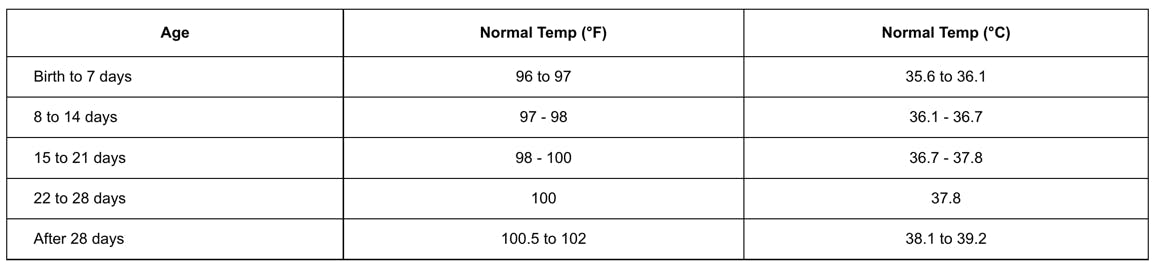
- Normal Body Temperatures of Neonate Pups by Week
- Effects of High and Low Body Temperatures in Neonate Puppies
- What to Do With Pups With BELOW Normal Body Temperatures
- What to Do With Pups With ABOVE Normal Body Temperatures
Introduction
Newborn puppies cannot maintain a healthy core body temperature on their own, a state known as poikilothermia. In addition, neonate pups cannot shiver, pant or do any of the other things that a mammal normally does to maintain its body temperature. As a result pups depend upon their environment, including their mom, to keep them warm. Healthy pups are very good at moving toward and away from heat sources to maintain their body temperature but sick or chilled puppies are less able to do this due to weakness.
As a result of being poikilothermic, neonates normal body temperatures are lower than adults. During the weeks after birth, normal temps for pups are much lower! Please note that many GP vets aren’t aware of this so may not realize a pup is in danger.
Normal Body Temperatures of Neonate Pups by Week
Effects of High and Low Body Temperatures in Neonate Puppies
Both high and low body temperatures are dangerous for pups since both interfere with digestion and other important life systems.

Always, always check body temperature before feeding a sick puppy, whether with a tube or bottle.
What to Do With Pups With Below Normal Body Temperatures
To check a pup’s body temperature, use a rectal thermometer and be sure to put the thermometer in far enough to completely cover the metal or mercury tip. Keep the thermometer in either until it beeps if it is a digital or for THREE minutes if it is a mercury thermometer.
If your pup is chilled, raise its body temperature slowly over 60-90 minutes. Don’t overheat it to warm it up or you can put it into shock. Using your warming box, heating pad or mat, or a hot water bottle, but monitor humidity so you don’t dehydrate the puppy.
Don’t casually heat puppies that aren’t chilled. Be cautious with external heat sources like heating lamps, pads, etc. unless the pup can move away from the heat to adjust its temperature.
What to Do With Pups With Above Normal Body Temperatures
If a pup has an elevated temperature, first insure that it hasn’t been overheated by the environment, such as under a heat lamp or in a warming box where it couldn’t get away from the heat. You can cool the pup off on any cool, dry surface, such as hard floor or counter.
If the pup still has a fever, check for dehydration, which can cause elevated temperatures. Remember that we check hydration status in puppies by tapping their gums, not pinching the skin on the back of their necks. If the gums are tacky, start by hydrating the pup. If the temperature remains high, take it to the vet for antibiotics.


