Straight from the Center of the Ring: Growing Up a Show Dog
Learn about everything that happens in between getting your new puppy and its first dog show!
Good Dog is on a mission to educate the public, support dog breeders, and promote canine health so we can give our dogs the world they deserve.
Good Dog is on a mission to educate the public, support dog breeders, and promote canine health so we can give our dogs the world they deserve.
Good Dog is on a mission to educate the public, support dog breeders, and promote canine health so we can give our dogs the world they deserve.

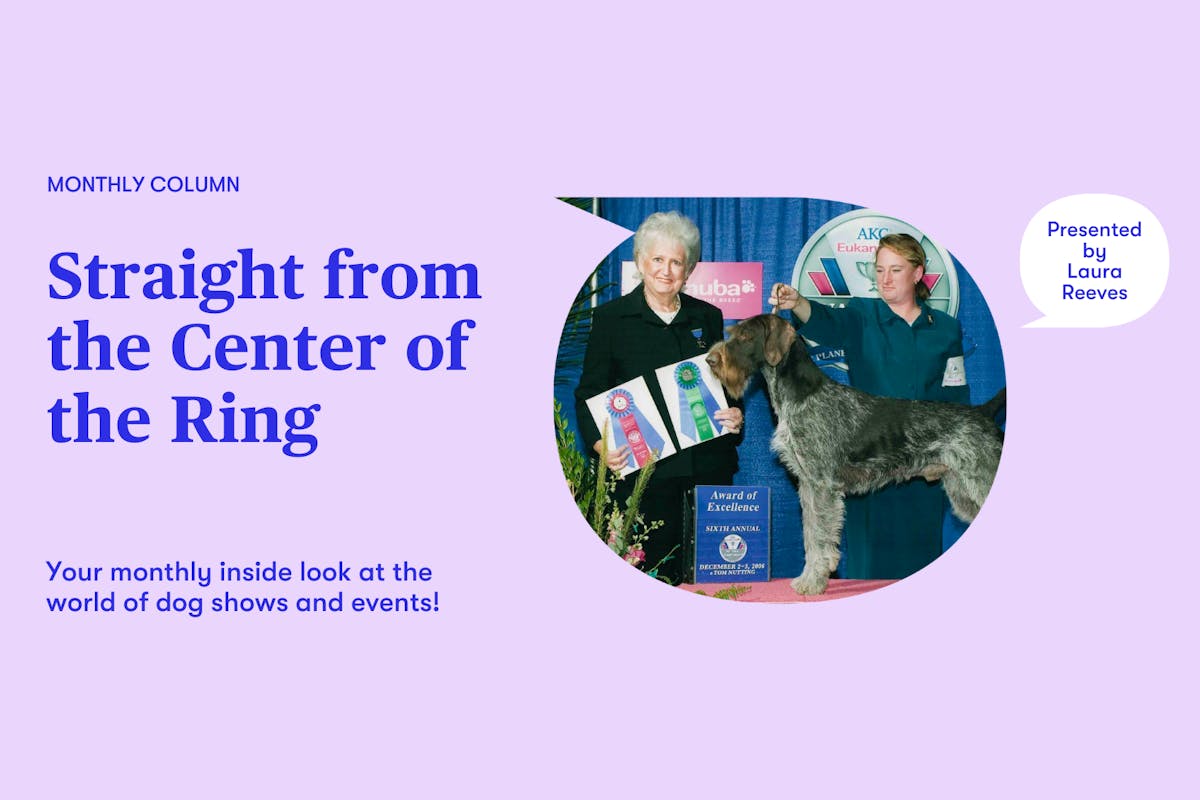
This month, we're talking about growing up a show dog. This addresses the time from the first day you get your new puppy to its very first dog show. We often talk about “born show dogs” to describe the special presence some dogs have. Show dogs are born, but they are also made. Your job is to be in charge of developing the dog’s experiences in life to help bring out the best in them.
Good show dogs start with a few basics. They have to have breed type (in other words, they have to generally meet the breed standard). They have to have the correct structure for the breed. And they have to have a reliable temperament. We talked last month about how to select a puppy that meets those criteria. Now we can talk about how to polish the raw material into a shining gem.
Establishing Boundaries
One of the most important boundaries we can build with our dogs is for them to be safe and comfortable in a crate. Crate training your show dog is a must. A crate means safety for your dog -- at the show, in the car on the way to the show, in the hotel room when you're gone to dinner. We wouldn’t dream of putting our child in the car without a car seat or letting them run free in a strange place unsupervised. Our dogs deserve the same consideration.
Early Socialization
Show dogs have to be exposed to a lot of different things. Walking confidently into the local Expo center with 3,000 dogs and echoing walls and loud-speakers going off and crate dollies rolling by and barking dogs everywhere is a very different experience from the dog’s level than just walking around the block at home. Everything that we can do in puppyhood to make our pups comfortable with different environments is a good thing.
Check out Good Dog’s course on Savvy Socialization for more information!
Building Trust
We also want the puppies to have positive experiences. We want them to be happy. We want them to enjoy it. We want to protect them so they don’t get stepped on or bitten. We want them to really have a good time wherever we take them. And always remember, dogs take their cues from us.
Think about how you interact with the dog, because that has tremendous bearing on how the dog interacts with the world. Always try to have a very matter-of-fact introduction to strange things. If the dog is worried about it, wait for him. Let him go through the process of safely examining whatever it is from whatever distance makes him comfortable.
Fitness Fanatic
Good show dogs, in addition to being properly exposed to all the right stimuli and being given boundaries, also have to be physically fit.
With young dogs, you're going to let them do a lot of free-run playing. You're never going to take a baby puppy and bike it or do heavy road work or put it on a treadmill because they're still growing. They’re developing, but they need to do all of the things that build strong young muscles and bones and learn about how to use all of their various parts and pieces.
After the dog is about 12 to 18 months old, they can start having a little more formal training. You can try teaching them how to trot by a bicycle. This is a really good way to teach the dog to move in a balanced manner. In other words, his trot should develop the ability to both reach and drive, front and rear. With larger dogs particularly, unless you're a good jogger, it's very difficult to teach your dog to trot at the right speed and to do it in a balanced way.
Hear more from Dr. Chris Zink, DVM, on how to exercise your dogs.
Table Talk
Show dogs need to be correctly groomed for their breed. If you don't start with them when they're eight weeks old, by the time they are a year old and fighting with you about it, it's going to be miserable. So, your job is to start putting the dog on the grooming table early. Introduce the table slowly with lots of rewards for being on it so the pup learns the table is a great place to be. This also helps you start training the dog to be examined on the table or training the dog to do a proper stand stay. Puppies are more likely to be good on the raised environment of the grooming table than they are on the ground. It is much easier to teach them to stand up and be still if you start with them on the grooming table.
Listen to Allison Alexander’s episode of The Good Dog Pod to learn top tips on how to keep your dog healthy, clean and mat-free at home.
Leash Walking
Finally, developing your show dog requires polite walking on a loose leash. With my young dogs, I start on just a kennel lead, no chain, no big drama, just a soft kennel lead. I follow them around, keeping the leash totally loose. At a certain point I call them to me. They come running up and follow me for a while, also on a loose lead.
Keeping the leash loose as much as possible is the secret to success on this. Dogs have a natural reaction to resist pressure. In other words, if you pull one direction, they will pull the other way. Call the puppy and walk the other way, give a treat and lots and lots of praise.
Growing up a happy, confident, well-socialized, -conditioned and -groomed show dog doesn’t happen by accident. You are the secret ingredient.
To stay up-to-date on this column and more great content from Good Dog, sign up to join us at gooddog.com/join!
Join us next month...
As we go step by step through “how to stack your dog” for examination in the show ring.
Join our Good Breeder community
Are you a responsible breeder? We'd love to recognize you. Connect directly with informed buyers, get access to free benefits, and more.