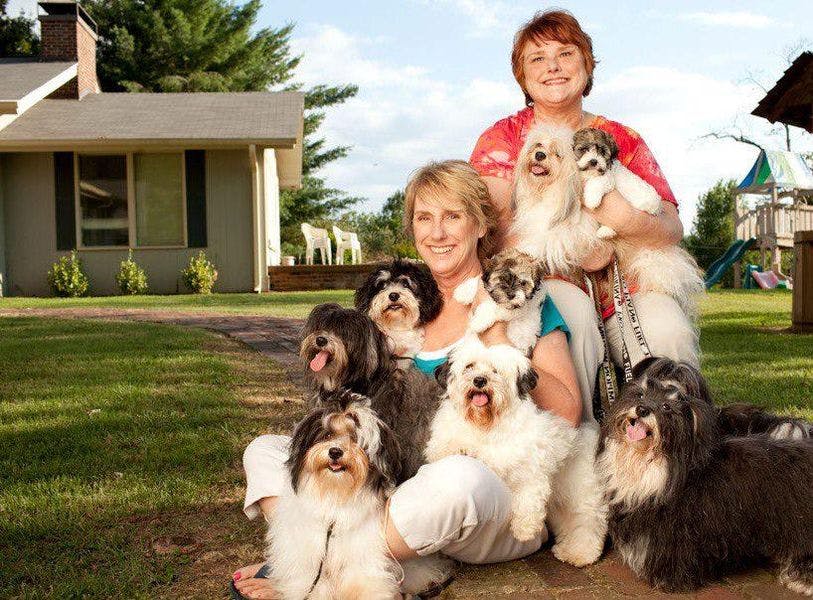
Testing to Expand Your Gene Pool with Dr. Marty Greer, DVM, JD
Dr. Marty Greer, DVM, JD of Revival Animal Health discusses best practices in expanding the gene pool of your program.
Good Dog is on a mission to educate the public, support dog breeders, and promote canine health so we can give our dogs the world they deserve.

Good Dog is on a mission to educate the public, support dog breeders, and promote canine health so we can give our dogs the world they deserve.
Good Dog is on a mission to educate the public, support dog breeders, and promote canine health so we can give our dogs the world they deserve.
Dr. Marty Greer, DVM, JD wears many amazing hats. She is a practicing veterinarian who specializes in canine pediatrics and reproduction; she is a breeder of Pembroke Welsh Corgis and Danish-Swedish Farmdogs; and she is an attorney at Animal Legal Resources, LLC. She is also the Director of Vet Services at Revival Health. She is also an accomplished author, writing the seminal textbook, Canine Reproduction and Neonatology, and more recently, Your Pandemic Puppy: Finding and Raising a Well-Adjusted Dog During COVID-19.
Because of her expertise, she is in high demand to speak about all things related to breeding, reproduction, and raising puppies. Good Dog has been fortunate to have Dr. Greer as a guest on the Good Dog Pod and our webinar series, and we could not be more excited to have included her as a speaker at our Health Symposium!
If you liked Dr. Greer's talk, you can find all of the Health Symposium videos here!
Join our Good Breeder community
Are you a responsible breeder? We'd love to recognize you. Connect directly with informed buyers, get access to free benefits, and more.
Transcript
Dr. Marty Greer [0:00] Good afternoon, everybody! It’s great to be here, so thank you for joining us. I have been given the opportunity to talk about testing to expand your gene pool, so I sat down and did some thinking about how I approach counseling breeders on what to do with their genetic material and how to proceed with breeding. I came up with 29 ½ thoughts on how we can expand gene pools and what we can do. I’m going to go ahead and get started.
[0:35] As you can see, I do have an interest in dogs. That’s been a lot of fun for us. This is one of my litters of puppies; this is one of my Corgi litters that we had a few years ago. In this litter, we were blessed to have a National Pembroke Welsh Corgi winning dog, so we’ve had a lot of fun with our breeding program over the years.
[0:58] I do want to make sure that I share a conflict of interest. I work for Revival Animal Health. I do some presentations for Purina and MARS. I’m also a board member of the International Partnership for Dogs. That is an unpaid board position, just to be clear. I wanted to share that so that nobody has any questions or surprises.
[1:20] We’re going to start off with some thoughts, and we’re going to go through a few topics and then come back to some thoughts. We were putting this together, and I started thinking about how I wanted to start this off. Really, like Forrest Gump said in his movie, breeding (other than life) is like a box of chocolates: you never know what you’re going to get! I’m going to go through this one by one and share some information with you.
[1:43] Today we’re going to talk about DNA testing, DNA samples, health screening testing, and then using our health screenings so you have a basic understanding.
[1:54] Today there’s been a lot of great information with really smart research people, far smarter than I am, but I do want to make sure that we have an overview to begin with so that you kind of have that basic foundation. We’re going to talk about the kinds of DNA tests. We’ll talk about determining what breed they are, what the heritage is, what the health profile looks like, what the traits are, and then gene therapy. Gene therapy—we’re not going to really say anything other than there is no veterinary application to that process. So, for kinds of DNA testing, there is one kind of test, and that’s to determine what breed or breeds your dog is. That includes the Wisdom MX test, Embark test, and the Paw Print Genetics test. I’m going to ask: What’s the value of knowing the breed? One is if you have an accidental breeding or some kind of breeding that results in something that you weren’t expecting to see. Unfortunately that happens; I’ve had clients call and not understand why their puppies don’t look like the purebred puppies we thought they were. By doing this kind of testing, you can at least narrow it down to what breed of dog might have accidentally done a breeding. Sometimes we see purebred litters all from the wrong dog, and sometimes we’ll see litters with multiple sires. That’s important information if you’re struggling with what happened. How did I end up with half a litter that looks like my breed and half a litter that looks like something else, and what was that something else? You can chase that down. The other, of course, is helping to predict health concerns. Health concerns do go hand-in-hand with certain breeds. All of you that have purebred and purpose-bred dogs know what your health concerns are. So it’s important that you can use that information to help link what kinds of health concerns you should be looking at and how you can manage those. Next we’re going to ask about parentage. There’s absolutely value in knowing what the parents of the patient or dog are. Again, from an accidental breeding perspective, you of course know who the mother is (assuming that you didn’t mix up your litters in the whelping box because you had two litters at the same time, and you switched puppies around so the females could help each other out). Of course, again, we have the accidental breeding so you can try to determine who the individual father of the litter was, not just by breed. And then of course there is deliberate multiple sire breedings. That is allowed by AKC and some of the other registries. As long as you can prove the DNA of the father, then you can register those puppies with those breed registries. In fact, we have done that in our own breeding program, not once but twice. I’ve deliberately shipped semen of more than one dog. In the first case, the entire litter was sired by one dog. In the second case, we actually did have half-sisters in the same litter. Three puppies were from one sire and one puppy was from another. For people who think that multiple sire breedings always lead to one sire being the sire, that isn’t actually the case. I’ve had many people tell me the same situation. There is value in knowing the parentage.
[4:56] The third thing that we can DNA test for is the health profile. What is the value of that? Well, first of all, you want to start avoiding breeding for certain disorders, diseases, traits, so that you can breed away from certain problems. The other is to help magnify desirable traits. If you want certain information, then you can get that from the DNA and determine whether the dog that you’re breeding to or with has those traits that you want to avoid or the traits that you’d like to chase down and get more of.
[5:30] Fourth would be the traits. Again, we have the value in breeding goals. The traits that we can test for are going to be: coat, body features, performance, body size, and genetic diversity. I’m going to go through those, just to introduce the concepts, not to go into a lot of detail. The first is coat. What kind of information can we get from testing for coat?
[5:55] One would be the base coat color, so that would be color dilution, whether they carry for black or brown pigment, whether they carry for dark or light fur, what they do for red pigment intensity, and dark brown pigment. This information can be determined by DNA testing with particular companies. I’m not going to get into which company does which, but you can find this information out. This is basically an introduction, just so you know what kind of tests are available to you as you develop your breeding program.
[6:26] The second is going to be coat color modifiers. The first is base color. Then we have modifiers like hidden patterning (phantoms), body patterns, saddle tans (in Corgis), harlequin (of course is primarily the Great Dane-type dog), merle (which we see in many breeds), facial fur patterns, and white spotting and roan. Again, just information for trying to sort out how you want to breed. There are certainly certain purpose-bred dogs and purebred dogs that are chasing down certain coat colors because they are desirable for the pet market.
[7:02] Third would be other coat traits. Furnishings (and I did put a picture of an Irish Setter on here just because furnishings may not be a word that everybody is familiar with) are that long coat they carry. Second would be coat length. Third would be shedding, particularly in the Doodle-type breeds. They’re trying to find dogs that have minimal shedding to appeal to families that may have allergies or other concerns about shedding; that’s really important. Coat texture, and then we have hairlessness (Xolo-type) and hairlessness (Terrier-type). This is a Xolo-type of hairlessness in this other photograph. And then Oculocutaneous albinism (albinos) so the eye and the coat color where the entire dog lacks pigment including the eyes (those pink-eyed, white color animals, mostly seen in rabbits and mice and those things but every now and then, those show up in dogs).
[8:00] Additional traits that we can test for: muzzle length, tail length (in certain breeds bobtail is a desirable trait, in certain other breeds it’s not), hind dewclaws, eye color, and the back muscling and bulk.
[8:21] And then we have, in traits of performance, appetite and altitude adaptation, which I think is really interesting, that we can test for that.
[8:30] And then body size.
[8:32] Now that you know what you can test for as far as traits go, what kind of samples do we need to send to the lab? Most commonly, we see either whole blood put into a lavender-top or purple-top tube that doesn’t clot so that keeps the cells free for testing, or cheek swabs. That’s pretty easy to collect. Nails and hair can sometimes be used. In certain cases, we’ll use frozen semen. If we have a dog that’s deceased and left long ago before we collected DNA on him or before we even knew that there were DNA options (because we do have frozen semen that goes back into the 1970s and 1980s), you can thaw out frozen semen. Unfortunately, sperm cells themselves don’t contain DNA but the epithelial and blood cells that may be affiliated with the semen will show enough DNA that we can do the testing. Tails and dewclaws—fewer labs are taking these now than they did before. The FTA Card: that’s a paper card that we use in our practice. We put blood onto the card. It’s allowed to dry. And then that can be filed and stored long-term without degradation; we can still do DNA testing on it, but it doesn’t require throwing out semen. For dogs that are valuable in a breeding program, we’re going to want an FTA Card on those dogs. Down the road, there are going to be DNA tests that we currently don’t have, so after that dog is no longer available, an FTA Card can be used as archiving. Otherwise, whole blood can be sent down to Missouri and they’ll archive that in the OFA bank. Again, you have access to blood without semen for dogs that you may want to use in your future breeding program. Post-mortem tissues: so after a dog is euthanized or passes away, those can be harvested and used for DNA. And then umbilical cords, but most people don’t think that far ahead; they’re just glad to have puppies, and they’re not really thinking about banking umbilical cords on the puppies.
[10:24] DNA samples—just want to briefly mention that dogs should not be fed within an hour or approximately an hour of the time that a DNA sample is collected. If you are doing young puppies, you need to take them off the dam for at least an hour. Most people wait until the puppies are old enough to start weaning before they start collecting DNA. DNA never changes, which is really cool about it. Once you have DNA, you have it forever. But you don’t want to have food, either mother’s milk or any kind of dog food (kibble) or treats or anything like that. I really encourage people to wear gloves. Change out the gloves. Of course, be careful with any kind of equipment in between dogs so that you don’t cross-contaminate. I just think wearing gloves and being careful to wash everything and move along through the sampling system, you’ll be less likely to cross-contaminate and have inaccurate results.
[11:17] Then there’s two basic kinds of health screening tests. I know that a lot of information has been shared earlier today, so I don’t want to get too repetitive, but just to be clear that a phenotype is the appearance or result testing, something that you can see, and genotype is the DNA.
[11:39] Phenotype will include any kind of appearance or observed trait, so that may be organic acids that can be tested for at the UPenn genetics lab. That will include most of the things we do at OFA, so eye exams; joints like hips, elbows, spine, shoulders, hocks, all those things; thyroid disease; cardiac disease (which is tested for by listening to the heart or with ultrasound); dental would be how many teeth a dog has; trachea would be the size of the trachea; bile acid would be a bile acid test; and then of course PennHIP that Dr. Smith just finished covering. Deafness, including BAER testing. Sebaceous adenitis which is tested for in some of the curly-coated dogs with a skin biopsy. Reproductive capability. Temperament. Longevity. And many other physical traits.
[12:34] If we’re looking at eyes, we’re having opthamologists take a look at the eyes during a physical exam and checking for changes that are seen on exam of the eye. For cardiac, we either do ostiltation (which means listening to the heart) or an echocardiogram (which is an ultrasound of the heart). BAER testing is a computerized test that, for puppies over 6 weeks of age, is done to see if they perceive hearing. Puppies that are in white-coated groups of dogs do frequently have deafness, but puppies are born with normal hearing if they do have the genetic type of disorder that they lose their hearing, but that loss is around 4-5 weeks of age. So puppies need to be old enough to be BAER tested before that test is done. Very few places have BAER testing. There’s usually a couple in every state. It’s very specialized but very useful for the white-coated dogs.
[13:28] The OFA hip extended view—again, I just want to be clear so that people understand what that view looks like. Dr. Smith did a great job of showing what PennHIP views. There are 3 of those, so I don’t need to show that again. But the OFA hip extended view is basically the dog is on their back. The legs are extended out behind, as if they were to lay flat out and the dog needs to be symmetrical right to left so that there’s no distortion of the hip joint by positioning. Positioning is very specific for this.
[13:57] And then for genotype examples we have many, many eye disorders. We have degenerative myelopathy. We have EIC. We have MDR-1 and many, many other tests. Every day there are more tests coming out that are DNA-based tests, so they’re interesting to watch. If you go to your veterinarian and your breed has a new DNA test, don’t be critical of the veterinarian for not being aware of that test because tests are coming out so frequently and so fast. And they’re so effective, but we may not simply have that information.
[14:30] The most common genetic disorders that we see in dogs—the top 6 that are listed—are going to be: hip dysplasia, bladder stones, epilepsy, heart disease, degenerative myelopathy, and brachycephalic syndrome. So I’m going to go ahead and ask you which of these we have DNA tests for.
[14:51] For hip dysplasia, there is no DNA test at this point, mostly because we think there are 14 or so genes that are involved, plus there’s environmental influences as well, including age, weight, footing. A lot of different things play a role in hip dysplasia that will be important to be tested for. Bladder stones—there’s one kind of bladder stone that we can test for. Epilepsy—at this point, there is no DNA test for. In heart disease, there is one kind but there are many other kinds of heart disease, so we know that what we see in Boxers is different than what we see in Cavaliers and a lot of other breeds. So far, there’s not one particular test that we can test for heart disease in all breeds. Degenerative myelopathy—depends on the breed. There’s a lot of information out there on different breeds with DM testing. Unfortunately, we’re not as accurate as we would like to be on some of the breeds. And then brachycephalic syndrome—there really isn’t a DNA test for, but that’s an observed trait, so brachycephalic syndrome would be anything with a brachycephalic breed, the breed with a short nose: perhaps an elongated soft palate and perhaps a narrow trachea. There is no test for that at this point.
[16:07] What else don’t we have DNA tests for? Well, there is one cancer test (the BRAF test) for bladder cancer (transitional cell carcinoma), but most forms of cancer don’t have tests yet. Now, lymphosarcoma and hemangiosarcoma—they’re getting very close on DNA. They probably got linked DNA tests. They’re not quite there yet. Those are really important diseases because, again, we see a lot of those. Cruciate ruptures—they’re looking at that. There may be a genetic component to that. Allergies—we don’t have a test for that. Thyroid disease—no. Fertility—no. Fertility is a very elusive and complicated type of trait, and we don’t consistently see one cause for infertility or good fertility, so it’s going to be a long time before we can do anything with that. Bloat—gastric dilatation and volvulus. Longevity—again, many, many factors play a role in how long a patient lives, so at this point, we don’t have a test for longevity. Temperament—I think they’re working on some things with that, but again, we don’t have temperament DNA tests. And there’s oodles of other disorders that we don’t have DNA tests for. So your next question is going to be: Why don’t we have tests for these?
[17:16] One reason is it can take multiple genes. Many genes may play a role in the development of one trait. We don’t have that test yet. Two is environmental influences. The environment, the footing, the kind of experiences that a dog had growing up—there’s many environmental factors that can play a role in how dogs develop. Nutritional influences—so the type of food and the body weight and body condition, exercise, those things influence the expression of DNA. Again, that isn’t one thing that we can test for. In some breeds we see different mutations for what looks like the same disorder, so you can’t apply what goes into the Scottish Terrier test to a Pembroke Welsh Corgi in all cases. You do sometimes have to come up with different tests for different breeds because it’s a different mutation that caused a similar disorder. There’s a lot of other complexity with this. Again, we’re a long way from DNA testing for everything.
[18:09] So your question then is going to be: When does DNA testing not help me in a breeding program? Number one is you may not need it. If you have an observed trait that you don’t need to test for, then there’s no reason to really go on to develop that DNA test. I have Corgis, and there is a fluffy gene (the long-coated gene in the Corgi). You can test for that if you want to breed a fluffy Corgi to a non-fluffy Corgi and produce non-fluffy Corgis, but the fluffy gene is an expressed gene so we can see that. In this other picture is the Yellow Lab with the liver-colored nose. We know what that dog’s DNA is. A black dog with a black nose needs DNA testing to determine if it’s a black dog that carries only black or a black dog that carries for chocolate or a black dog that carries for yellow. Other Lab breeds are going to need coat-color testing to determine what they carry, for genetics.
[19:01] When else does DNA testing not help in a breeding program? Well, if we don’t have the DNA test yet. I just listed a number of things that we don’t DNA test for, and there are going to be hundreds of things that we’ll come up with DNA testing for in the next 10 or 20 years. In your breeding lifetime, you may see a lot of DNA tests come to market. Third is if the DNA test is not accurate. I’m going to talk about that later in the presentation, but sometimes if we think we have the gene marker for it, it may turn out to be that it’s close but not quite close enough, or there may be some other reason for inaccuracies.
[19:38] Four would be: DNA test is not applicable to that breed. There are DNA tests, screening panels, that are done on dogs now that are going to test for 250 different genetic disorders. But if your dog is tested for a genetic disorder and it comes up that it’s an affected or a carrier dog for that disorder, but it’s never been a disease reported in your breed, then you need to disregard that information. Or at least put it further down your list of priorities. We’re going to talk about prioritizing testing in a few minutes, but not all DNA tests that are for one breed will show up as being important or significant in another breed.
[20:16] And then we have new mutations, which happen every now and then. The Schipperkes had a problem a few years ago with an MPS disease that showed up. New mutations can happen in every generation. Don’t be surprised that a mutation shows up in your breed that’s never been thought of before.
[20:32] I’m now going to go through my 29 ½ thoughts about things that you can use in your breeding program.
[20:40] This is a little tricky because so much information has come to you today by really great people, but how do you put this all together? “I’m a breeder, and I feel so overwhelmed by all this information. I don’t even know where to go with it.” So I’m going to help you today with some thoughts that I have. Anything that shows up in the next slides as green means you can expand your gene pool with this information; this is good information. Second would be something that we need to hold on or that might be questionable information for you. Third would be something you want to avoid in your gene pool so that you would want to avoid it and reduce the risk of producing puppies that may have disorders.
[21:15] The first promise that I’m going to share with you (and I know this is hard to believe) is: there is no perfect dog. You may think you have a dog that’s pretty close to perfect, but there is no genetically perfect dog out there. There is no genetically perfect human out there. Unfortunately, humans are the most out-crossed species on the planet. We still all have genetic disorders. My mom had hip dysplasia. My dad had allergies and near-sightedness. They should not have bred. But here I am! Fortunately, I don’t have hip dysplasia, and I don’t have allergies, but I am near-sighted. Despite the fact that nobody is perfect, there is still always going to be that goal of trying to breed the perfect dog. So until your dog cleans up the yard after themselves, there is no perfect dog.
[22:02] Two is when you’re assessing how you’re going to move forward in a breeding program, you have to remember that you’re breeding the whole dog. Looking at one trait only is not going to serve you well. You need to look at attributes—great attributes and some downsides to the dog. You need to be honest with yourself and realize that you’re putting together the genetics from the whole dog; you’re not going to be able to just pick and choose the traits that you have.
[22:26] I personally have started developing tiers of genetic defects or disorders, traits. I think it’s helpful in trying to decide how to prioritize your breeding program. Tier 1, to me, is a minor disorder: something that’s an inconvenience but not anything that causes long-term health effects on a patient. So, you (in your own breeding program, in your own gene pool, in your own breed) need to decide what’s important to you and what’s not as important to you because there is no perfect dog. Every one of us has something minor wrong with us. You’re probably at some point going to produce a puppy (a male puppy) that has a retained testicle. I would not suggest you use him in a breeding program, but genetically, his siblings (even his sisters) are going to carry the gene for that. But very few patients develop enough of a problem with a retained testicle that they die from that. To me, that’s a relatively minor disorder: something that you know about when they’re young but it’s minor enough that if you’re careful, you can avoid that in your next generation. Those are my greens. Tier 2 would be a disorder or disease that needs to be chronically managed, so that’s going to be something like allergies that require chronic medication, thyroid disease, and probably some other disorders as well. Tier 3, for me (and this is everybody’s own decision, so I can’t tell you how to do things; this is just a suggestion), is if you have a life-threatening, life-altering, or life-changing disorder in your breed or in your genetics. That would be diseases that are crippling, diseases that are painful, or diseases that diminish the quality of life of the pet and of the owner of that pet. So, I think that those are going to be things like orthopedic diseases that are crippling and altering their life expectancy. As Dr. Smith talked about: hip dysplasia. As Dr. Meurs talked about: cardiac disease. Epilepsy to me is a life-threatening, life-altering thing. To me, bad temperament is as well. I don’t like to breed dogs that have bad temperament. We know temperament is highly inherited, and it’s important that we are avoiding things that are going to change the quality of life or the length of life of a particular patient or the person that lives with that dog.
[24:41] To me, the three tiers are going to be: A, B, and C. Pick your battles. Fatal diseases with young onset, so really serious diseases that start when a patient is really young, to me is a red. I wouldn’t breed that. And then non-fatal diseases that have late onset, are non-painful, may be less important in a breeding program. For some people, that’s going to be degenerative myelopathy. Corgis, if they get it when they’re 16 years old, hey, you know, at 16, you have to die of something. But they didn’t die young, and they didn’t die with a painful disease. Everybody has to establish what your genetics are, what your health concerns are, and what’re going to be triggers for you in a breeding program. I frequently have clients that call us. They’ve looked at a puppy in a litter, and they ask, “My last dog died of XYZ disease, and I want to make sure that the new puppy I’m getting doesn’t have that disorder, too.” Those are the ways that people think through the decisions that they make when they’re acquiring a dog or breeding a dog.
[25:40] Number 4! The question is: Can you use a carrier of an autosomal recessive trait in a breeding program? I don’t mean a dominant trait. I mean an autosomal recessive trait.
[25:53] The answer, to me, is I think yes. If you use a Punnett square, and you have a carrier that you can test the autosomal disease for (so you know if that dog is a carrier, or an affected dog, or a normal dog) then you can breed a carrier to a normal dog and use that dog in a gene pool/breeding program. So, yes, you can use carrier dogs in a breeding program if you breed the carrier to a genetically normal dog. But without the DNA test for an autosomal recessive, you can’t use that information.
[26:28] Your first generation, you would produce half carriers and half normals. Your second generation, if you breed clear, you’ll have all clear dogs.
[26:38] My next question will be: Can you use an affected dog with an autosomal recessive trait in your breeding program? That’s going to be a little trickier because there are people that don’t want to think about using an affected dog because they think it’s a bad idea. But if that dog has a lot of other high-quality traits and you are careful with your gene decisions and you can genetically test for an autosomal recessive, yes, you can use an affected dog, if you breed to a normal dog—not a carrier. In this case, you have to breed an affected dog to a normal dog. If you’re doing that, first generation is going to look like all carriers.
[27:20] Your second generation you can breed and get 50% carriers. And your third generation, you can have all the way up to a clear. Three generations. If you have a high-quality dog with other really important traits for your breed, then go ahead and use them but use them only if it’s an autosomal recessive disease that you can DNA test for and you know that that’s accurate testing. So it’s really important that you’re accurate in this information. So, can you use those dogs? Yes.
[27:46] My number 6 item to think about is to avoid for breeding one trait only. It’s easy to get wrapped up in one disorder, one disease, one trait that you’re concerned about that you want to avoid breeding. It’s easy to do that in a breeding program. But it gets you into trouble. The 1959 Russian Fur Fox breeding program is a really interesting breeding program. There’s been a lot of information floating around about it. But basically in Russia, they were trying to breed Fur Fox with beautiful fur for making fur coats to a Fur Fox that, instead of it being a nasty creature that would bite the people who were trying to handle it or take care of it, they were breeding for temperament only. They concentrated only on temperament as the only trait that they were looking for. Within roughly 10 generations, they had Fur Foxes that weren’t beautiful black dogs anymore, but they had spots and they had floppy ears. They completely changed the appearance of the Fur Fox, leaving it less valuable as a fur animal but a lot nicer for people to handle. So, in a short number of generations, they were unfortunately selecting for only one thing and lost the one thing that they were looking for, which was beautiful coat.
[28:57] Number 7 is: How do you select tests? This can be a little tricky because there are 250+ tests out there for traits and diseases and disorders. How do you decide? My recommendation is to use the Purebred Breed Club recommendations. If you are breeding purebred dogs, most breed clubs have health guidelines that are publicly on their website, published on the CHIC website, that you can use as a guideline for what tests you want to run, for what you need to run on your dog. It may be hips (for either OFA or PennHIP), it may be eyes, it may be hearts. You’re going to go down the list of the breed recommendations. This is usually put together by a breed club with a genetics committee with people on it that understand what are important traits in your breed. If you are breeding purpose-bred dogs that have a breed club, there are purpose-bred dogs that are not purebred dogs that have breed clubs. If you don’t have a breed club or you’re breeding purpose-bred dogs that don’t have that information, you can look at the breeds that are in the background of your dog. If you’re looking at a Goldendoodle, you may look at what Golden Retrievers and what the Poodle people are recommending, so you can put together your own ideas for what you should be using for testing.
[30:08] And then don’t forget that the OFA and CHIC databases are really important sources of information. If the people who are breeding dogs will do the testing and submit that information with microchips, that information is going to be published and available to the general public. You, as a breeder, on the OFA and the CHIC website—you can get onto those websites and you can get into their database, and they will show you the genetics. As Dr. Smith was talking about, being able to use other dogs in the line of dogs. You’re not just breeding the dog you’re breeding. You’re breeding all the relatives of that dog, so you can look at horizontal pedigrees that could be siblings, and you can look at vertical pedigrees, which would be parents/grandparents/offspring. You can look at that information and put together an idea of what you need in your breeding program.
[30:56] Next I want to say that there are no breeding police. Veterinarians shouldn’t be the breeding police. I think the consumers and the puppy buyers are a good place to look at what is important to the consumer. They’re certainly not going to be the only place that you’re going to look for for feedback or information. Kind of thoughtful about peer pressure. Sometimes people in your breed can be useful in helping you make decisions on whether a dog should be in the gene pool or not but not always. Facebook—I don’t really count on Facebook to be the way that I make decisions. There are people on Facebook that don’t understand anything about genetics or the inheritance patterns of diseases, and they’re going to be critical of how you’re running a breeding program. Just turn off Facebook when it comes to this.
[31:38] Number 10 would be when there is no test for it. Two things that I think are really important that we’ll probably never have tests for or accurate tests would be temperament and longevity. I like to breed dogs that have good longevity. I think that means that they have good orthopedics, good temperament, good health. I think dogs that live to be elderly are good dogs to include in a gene pool, so knowing the future dogs that are coming down from those dogs will probably also carry traits that help with longevity—that’s great. Temperament—I don’t make any excuses for dogs with bad temperament. You have to be honest with yourself. If the dog has a bad temperament, if this is a dog that’s not good around kids, not good around other people, not good around other dogs, you have to be thoughtful about whether that’s a dog that you want in your genetic line.
[32:26] Number 11 would be: Using DNA information for disorders not recognized in your breed? Like I said earlier, avoid that. If you get a test for something that you’ve never heard of in your breed, just disregard the information.
[32:37] Number 12 is: You always want to breed a future generation that is better than the current one or the previous generations. You always want to keep that breeding stock that is better than the parents, better than the mother, better than the father. That’s a way to improve the breeding program.
[32:55] 13 is: Breeding dogs that you really want to live with. Be honest with yourself. Temperament. Are these dogs that you enjoy being around, enjoy living with, perform the way you want them to? Whether it’s a pet dog or a performance dog, make sure you’re breeding dogs that you honestly think would be a great dog to have in your home.
[33:13] 14 would be finding complementary traits. In this case, I think Dr. Battaglia has a really good program that’s the Stick Dog Program. It makes a visual assessment of what traits you want to make complimentary. If you have a dog with a great head and another dog with a great rear, there’s a system that he has to use this program that you can outline those pedigrees because pedigrees are nice items that share with you who the parents are, but they don’t track traits very well. This program helps with tracking traits.
[33:46] 15 is: There is a limit to the number of health tests you can afford to do.
[33:54] 16 is: Purebred dogs inherently are purebred dogs. We can’t introduce new genetics into a line of purebred dogs without having purebred dogs. Unfortunately, our gene pool is limited by the genetics that we currently have. Shipping dogs and shipping semen across the world help expand that gene pool, but a Poodle is still a Poodle is still a Poodle.
[34:15] 17 is: Don’t spend money on testing if you’re going to use a coefficient of inbreeding greater than 5%.
[34:23] 18 is: Genetic tests are still emerging, so trust old tests first. As tests come out, it’s so fast that veterinarians (and you, probably) can’t keep up. With new tests, be a little skeptical before you swoop in and start throwing dogs out of your gene pool based on a new test that hasn’t stood the test of time.
[34:41] 19 is: Ask for genetic help. If your veterinarian can’t adequately help you with the genetics information out there, I can tell you that Carol Beuchat has an online free genetics course. This is information that you can sign up for and take her course. It’s a really important way for you to understand how to use molecular genetics, clinical genetics, population genetics, and COI.
[35:05] 20 is: Congenital is not the same as genetic. Congenital is a disorder that you’re born with. In this case, this is a Dachshund that was born without the normal bones in the front leg. So it was born that way, but it’s not necessarily genetic. And then don’t forget genetic diseases can be there for the lifetime of the dog but not show up until they become aged. So you may not see retinal disease. You may not see arthritis. You may not see those disorders until the dog becomes old. But it doesn’t mean it wasn’t genetic. It means it just took a long time to express it.
[35:38] 21 is: Keep track of your puppies. Christmas cards are a great way to keep track of how the puppies are doing, how long they live, what kind of disorders they have. Because everybody is going to have something. Puppy parties are a lot of fun to do, too. This is a picture of my daughter’s Bernese Mountain Dog litter. At 1 year of age, we had a nice pumpkin party. It was a great way to see the dogs, see how they turned out, take a look at them, see what their temperaments are like. It’s a really fun way to, in person, be able to experience the litters of puppies that you’re developing.
[36:14] 22 is: Know your breed standard or what appearance you have for goals in your breed.
[36:19] For instance, the Corgi’s Illustrated Standard. It has photographs of how all the dogs are supposed to look. On the left is what Corgis looked like in the 1940s. The picture on the right is what Corgis look like now. Big changes in that amount of time.
[36:33] But we also have Golden Retrievers and Labradors. We all see show lines and field lines that are genetically supposed to be the same dog but look completely different than each other
[36:44] And then we do have purpose-bred dogs, like the Goldendoodle Association, they have a standard for their breed, even though they are a purpose-bred and not a purebred dog. They do have a standard. You can look it up, and you can see what their expectations are for the size, shape, and structure of the dog.
[37:04] Then you need to learn what lines click with each other. Sitting around with old breeders, they can tell you a lot of information. Count on those old breeders to help you figure out what sets of genetics really work together well and which ones turn into a disaster. Sometimes it looks great on paper, the pedigree may look really good—it may turn out completely differently than what you expect.
[37:28] 24 is :Develop a system to select breeding stock. Keep track of how you’re thinking through things, who the people are that you’re using. Keep track of how you’re systematizing this.
[37:39] 25 is: Learning how to analyze pedigrees. In this case, you can use something like colored highlighters to take pedigrees back as many generations as you can find them. This is a really nice example of a pedigree where you can see that all the dogs that are in red are the same dog. All the dogs that are in gold are the same dog. All the dogs that are in purple are the same dog. All the dogs in green or blue are the same dog. You can now see how many times one individual dog shows up in a pedigree. It’s a very easy way for you to visualize if you are breeding too much down the same lines, not enough down the same lines. It gives you some information on how to keep track of that.
[38:21] 26 is: Develop a retrievable system so that you can go back and find that information again.
[38:27] 27 is: Learn how to analyze puppies. I think Pat Hastings probably has one of the most successful programs. She has the puppy puzzle. And then another piece of the puzzle, really good information with DVDs and books on how to assess your puppies when they’re 7 or 8 weeks old and start keeping track of things. Of course you want to catalog your photographs because going back and looking at those photographs that you take at 8 weeks of age and looking at them 8 years later can be really useful information when you’re developing a breeding program.
[38:57] 28 is: Anything that you can associate with a breed is inherited. So if you say this is a disorder that we see more often—say pyometra. Nobody thinks of pyometra as being a genetic disease. We know from studies done in Sweden that the incidence of pyometra is highest in the Bernese Mountain Dog at 48%. It’s second in the Leonberger. You can go right down the list. Any time you can say, “We see more pyometra in this breed or more parvo in this breed or whatever in this breed than other breeds,” that means there is a genetic basis to it. It doesn’t mean we have a test for it. We may not have a test yet. We may never have a test for it. But if you can say, “I see this more often in one breed than another,” it’s genetic. You’re going to have to get over that. It’s genetic.
[39:47] Number 29 is: Use the IPDF Harmonization website for guidance. They have a network with the IPFD. It has a database that will help you in understanding how you can use the genetic information that’s out there. It can save you a lot of time. It catalogs the genetic tests for a lot of different breeds. It helps consumers make decisions about what kind of DNA tests they should use. One of the other things is we don’t have any oversight, FDA guidance or otherwise, of the genetic testing labs. It’s going to help you to understand the quality of the lab that you’re working with and the information that you’re using. The IPFD information on their Harmonization website is really informational. Really good information.
[40:44] And then here at the very end, I’m just going to put one more little bit of information in. I’m going to put my lawyer hat on now. That’s when you’re writing a contract for puppy buyers, if you are guaranteeing against any genetic disease, I would be very, very careful in what you’re saying because right now there are a lot of genetic diseases that we don’t have tests for and, in fact, diseases we may not even know are genetic. Like I just mentioned too, the parvovirus and pyometra. There has to be a genetic component to that because we see a higher incidence in some breeds than others. As more DNA tests are developed, we’re going to see more and more opportunities for someone to come back to you if you promise them “no genetic diseases in my dog; I’m selling you a puppy that’s genetically perfect” and in the lifetime of that dog, in the next 15 or 16 years, we may have a DNA test for something that you never knew was genetic. So be very careful what you put into your contract. Get a lawyer that understands dog or horse or some other kind of animal law to help you with drafting a contract because if you don’t, 15 years from now, you may be on the ropes for something that you had no idea was even going to be important.
[41:56] What are the pros and cons of DNA testing? On the bright side, we have the ability to eliminate specific diseases in 1-2 generations. That’s really cool. If we can start breeding away from cancer and orthopedic diseases and other really serious disorders, that’s super cool. Number 2 is we have the ability to predict traits that we’re putting in our gene pool. If you have a particular trait that you’re looking for, whether it’s color or tail or whatever trait, we’re going to be able to figure that out more effectively with the testing that’s currently available. Number 3 is there’s an organization that has a matchmaker breeding plan. It helps you look at the genetics of those dogs that you want to put together and look at what you’re putting out there. Number 4 would be that we can increase genetic diversity. For instance, the Dandie Dinmont Terrier group put together a way that they could continue to have good breed type but genetically more diverse dogs by breeding with the DNA information that they have in their breeding program. So, super cool. Number 5 is the use of frozen semen and banked DNA is going to give us the opportunity to do some DNA testing we didn’t have before. I’m just going to very briefly mention that AKC is in the process of putting together a tool kit for breed clubs. Breed clubs can now own semen, frozen on dogs, so it’s no longer the responsibility of the person who owned the dog. You can now hand that DNA and that genetic material (frozen semen) off to the next generation through your breed club or through some other mechanism so that some of those really important foundation dogs that we have back from the 1980s, 1970s, and more recently can be used in gene pools after you may no longer want to be involved in a breeding program. Take a look at your breed club. We’re going to be starting to roll this information out. I’ve been on this committee as well. There’s information rolling out pretty soon about the use of this. And more and more tests will be coming much more frequently, so we’re going to have some really great information coming up soon.
[43:50] The dark side of DNA testing—we do need to talk about this. Number 1 is cost. It can become expensive to do every DNA test on the planet, so you’re going to have to start prioritizing or we’re going to start to see more panels develop. 2 is we’re going to start seeing people that select the wrong tests. They’re not going to know how to use this information, so they’re going to make mistakes. 3 would be we have no FDA oversight, so how the tests are performed, how the results are validated, and how this information can be shared with consumers. Number 4 is panel testing versus screening testing. Panel tests use 2 technologies to verify a result. But screen tests only use 1 technology. So we’re going to see some inaccurate results in some of those panels that have 250 screening tests. 5 is laboratory error or discordance: not all results are going to correspond. Sometimes we see linkage tests that are close to the right DNA but not the right DNA. There can be laboratory error. 6 would be panels including diseases not seen in your breed, which would cause confusion. Like I said before, you want to be careful with which tests you’re using information on. 7 is misuse or misinterpretation of tests and therefore narrowing the gene pool. If we throw out carriers and sometimes even affected dogs without the appropriate genetic counseling, we’re going to have people throwing out DNA. We’re going to see dogs that are getting too tightly bred. We’re going to see bottlenecks. We’re going to see problems with not having the genetic diversity that we need to. Number 8 is the lack of confidentiality and control. Once you send a sample to the lab, that lab owns your dog’s DNA. You no longer control it. Number 9 is there may be conflicts of interest. There may be funding of research projects that people might be maybe not as forthcoming with the information as they should be. We may see data used for profit. We may see manipulation of genetics for financial gain, so just be a little skeptical about DNA testing because of the conflict of interest.
[45:48] In summary, in the giant jelly bean jar of genetics, there are 29.5 things that I want you to think about when making decisions. You go back and think through these, give yourself some ideas. There are many important and really interesting bits of information we can glean from DNA testing, but don’t forget there is no perfect dog and you’re breeding the whole dog. So be careful with what you’re doing. Thanks for hanging in here. I think we’re ready to start a panel discussion! Thanks, everybody. I appreciate being here and thanks to Revival for the sponsorship.