Reconsidering early spay/neuter
This article includes a downloadable infographic for you to print and share!
Good Dog is on a mission to educate the public and make it simple for people to get dogs from good sources and for reputable breeders, shelters and rescues to put their dogs in good homes.

Good Dog is on a mission to educate the public and make it simple for people to get dogs from good sources and for reputable breeders, shelters and rescues to put their dogs in good homes.
Good Dog is on a mission to educate the public and make it simple for people to get dogs from good sources and for reputable breeders, shelters and rescues to put their dogs in good homes.
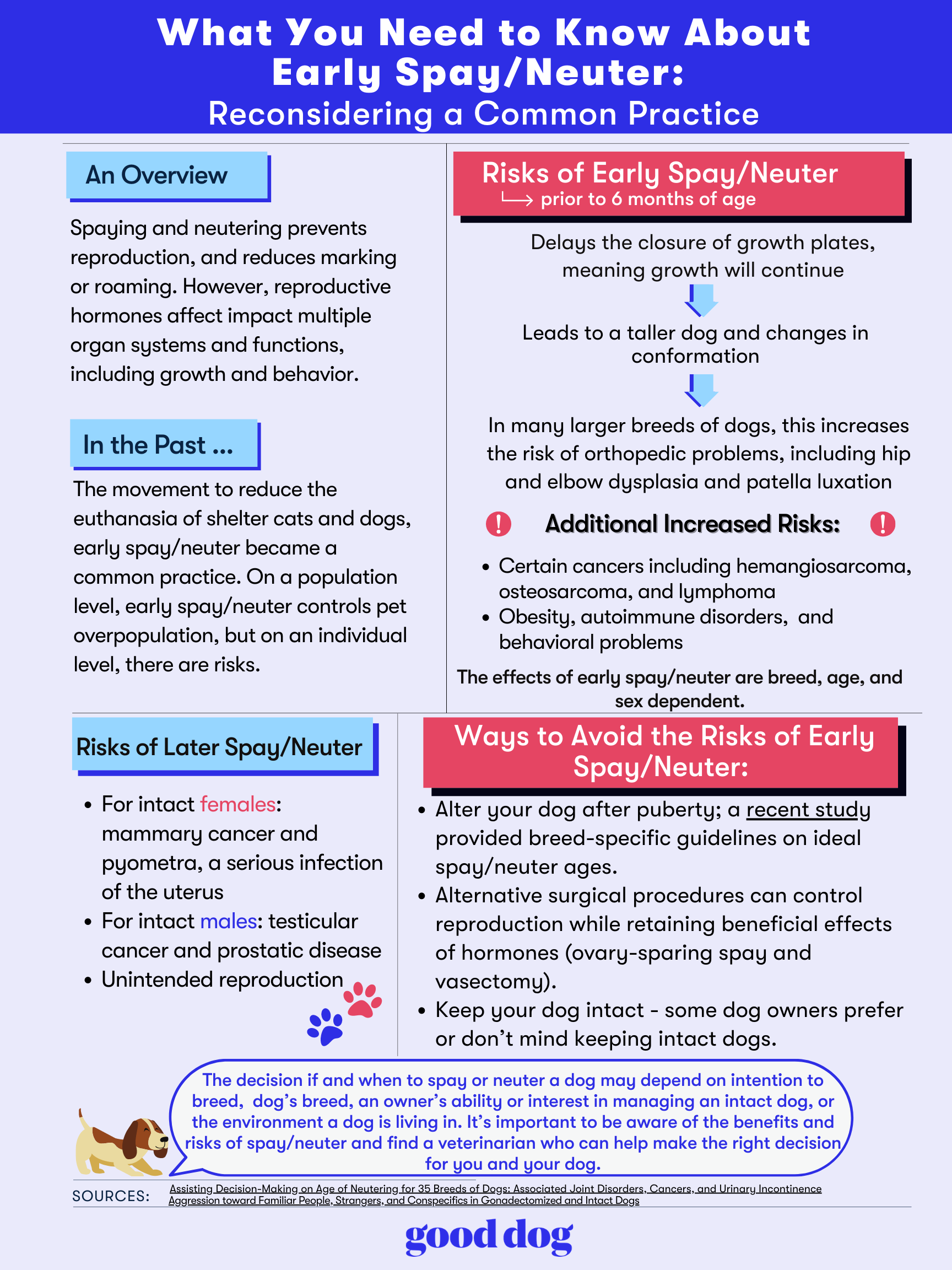
In the movement to reduce the euthanasia of shelter cats and dogs, early spay/neuter became a common practice. On a population level, early spay/neuter is an effective way to control pet overpopulation, but on an individual level, there are risks to be aware of.
Spaying and neutering prevents animals from reproducing, and may reduce some behaviors such as marking or roaming. However, hormones related to the gonads (reproductive organs) do not just affect reproduction and sexual behavior. Estrogen and testosterone impact multiple organ systems and bodily functions, including growth and behavior.
Join our Good Breeder community
Are you a responsible breeder? We'd love to recognize you. Connect directly with informed buyers, get access to free benefits, and more.
Risks of Early Spay/Neuter
Early spay/neuter (prior to 6 months of age) delays the closure of growth plates, which control bone development. When the plates are open, growth continues, leading to a taller dog and changes in conformation. In many larger breeds of dogs, this increases the risk of several orthopedic problems, including hip and elbow dysplasia and patella luxation. Other studies show that early spay/neuter may also increase the risk of certain cancers including hemangiosarcoma, osteosarcoma, and lymphoma, obesity, autoimmune disorders, and behavioral problems. The effects of early spay/neuter may be breed, age, and sex dependent.
Risks of Later Spay/Neuter
The primary risks of a later spay/neuter, or of not altering your dog are:
- Leaving a female dog intact increases the risk of pyometra, which is a potentially-deadly infection of the uterus
- Intact females are at increased risk of mammary cancer
- Intact males are increased risk of testicular cancer
- Unintended pregnancy
Ways to Avoid Risks of Early Spay/Neuter
Some ways to avoid the risks of early spay/neuter:
- Delay altering your dog. A recent study provided breed-specific guidelines on spay/neuter ages that may reduce the risk of related health problems.
- Although not universally available, there are alternative surgical procedures that control reproduction while retaining beneficial effects of testosterone and estrogen, such as an ovary-sparing spay and vasectomy.
- Keep your dog intact - Some dog owners prefer or don’t mind keeping intact dogs.
The decision if and when to spay or neuter a dog may depend on the intention to breed, the dog’s breed, a dog owner’s ability or interest in managing an intact dog, or the environment a dog is living in. It’s important to be aware of the benefits and risks of spay/neuter and find a veterinarian who can help you make the right decision for you and your dog.
References
AVMA. Elective spaying and neutering of pets: Gonadectomy resources for veterinarians.
Farhoody, P., Mallawaarachchi, I., Tarwater, P. M., Serpell, J. A., Duffy, D. L., & Zink, C. (2018). Aggression toward familiar people, strangers, and conspecifics in gonadectomized and intact dogs. Frontiers in Veterinary Science,5, 18.
Hart, B. L., Hart, L. A., Thigpen, A. P., & Willits, N. H. (2020). Assisting decision-making on age of neutering for 35 breeds of dogs: associated joint disorders, cancers, and urinary incontinence. Frontiers in Veterinary Science, 7, 388.
Hart, B. L., Hart, L. A., Thigpen, A. P., & Willits, N. H. (2020). Assisting decision-making on age of neutering for mixed breed dogs of five weight categories: associated joint disorders and cancers. Frontiers in Veterinary Science, 7, 472.
Houlihan, K. E. (2017). A literature review on the welfare implications of gonadectomy of dogs. Journal of the American Veterinary Medical Association, 250(10), 1155-1166.
Makielski, K. M., Mills, L. J., Sarver, A. L., Henson, M. S., Spector, L. G., Naik, S., & Modiano, J. F. (2019). Risk factors for development of canine and human osteosarcoma: a comparative review. Veterinary Sciences, 6(2), 48.
Spain, C. V., Scarlett, J. M., & Houpt, K. A. (2004). Long-term risks and benefits of early-age gonadectomy in dogs. Journal of the American Veterinary Medical Association, 224(3), 380-387.
Warnes, C. (2018). An update on the risks and benefits of neutering in dogs. The Veterinary Nurse, 9(3), 150-155.
For any easy way to share this information, we created the below infographic which you can download and print to share with your communities!