Examination and OFA registration of patellar luxation
Dislocated kneecaps in dogs lead to pain and increased risk of further joint problems
When your dog's kneecaps aren't okay
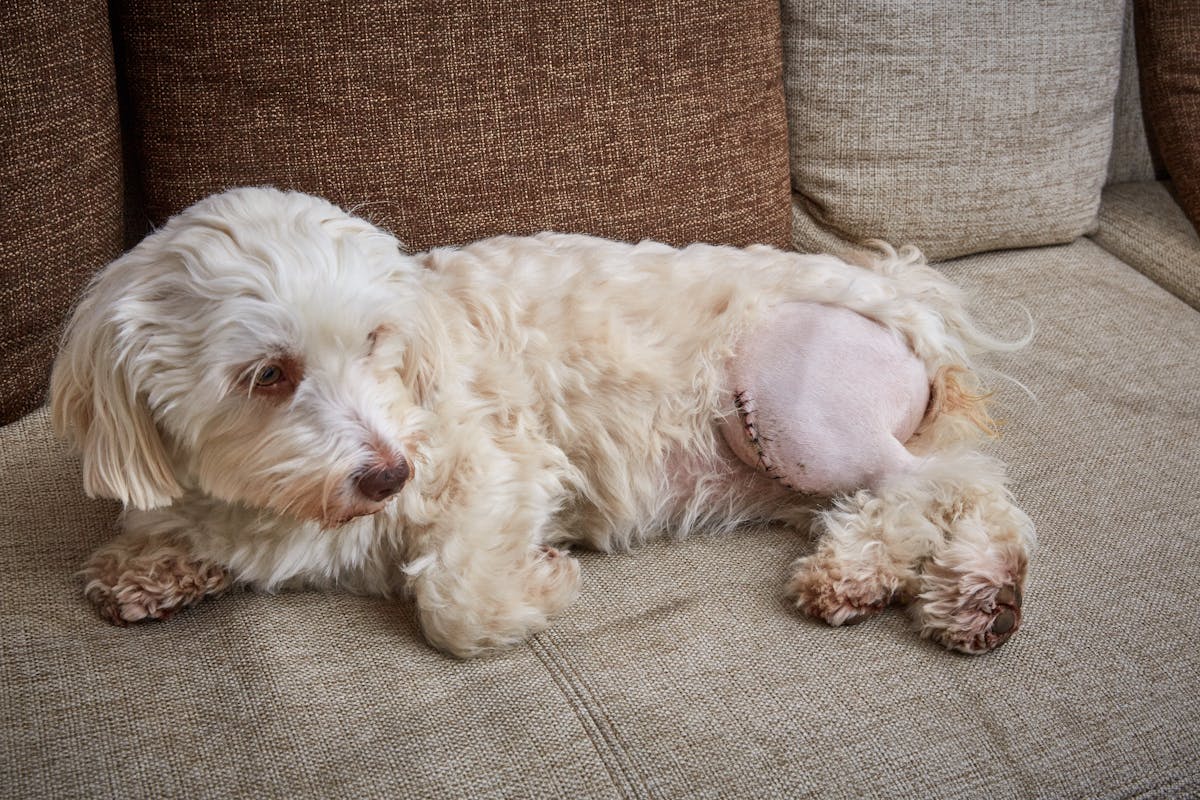
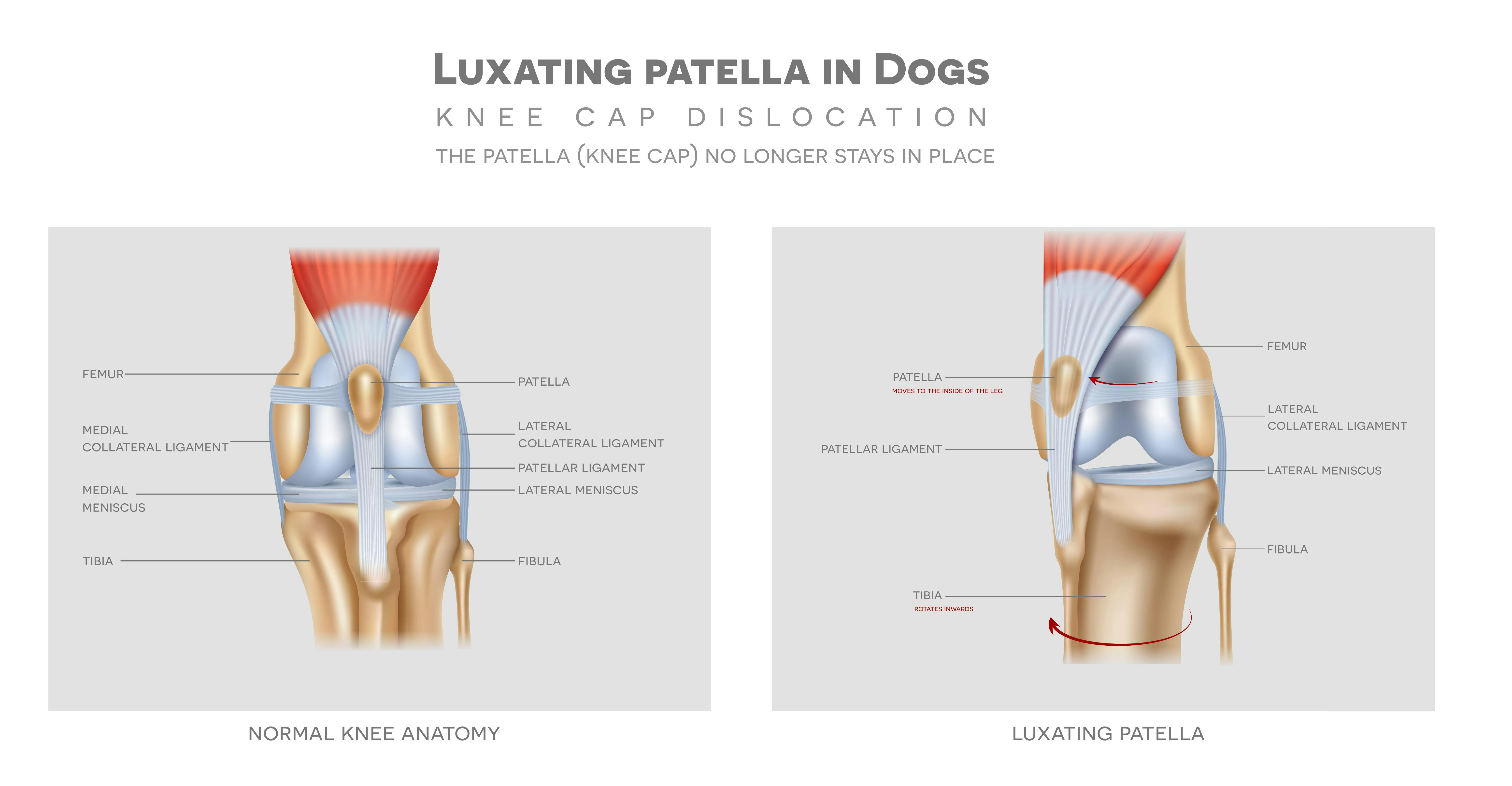
A luxating patella is when the patella (kneecap) dislocates or pops out of its normal position. This results in varying degrees of pain and lameness for the dog and increases the risk of further joint conditions, including osteoarthritis and damage to the cranial cruciate ligament (CCL). Severe cases may require surgery. The exact cause of patella luxation is unknown but both genetic and environmental factors appear to play a role in its development. It is recommended that breeders exercise caution when making breeding decisions for dogs diagnosed with patella luxation.
Screening requires a simple physical examination of dogs at least 12 months of age. A licensed veterinarian can grade the degree of luxation present. The scale ranges from Grade 1 (mild luxation) to Grade 4 (severe luxation). Results are then submitted to the canine health registry, the Orthopedic Foundation for Animals (OFA).
Note: Registration of test results is imperative for advancing canine health. Data from health registries support research efforts into canine diseases, establish validated diagnostic criteria, and maintain the reported test results in a reliable public database. Registered data can be used to identify newly emerging conditions, monitor the efficacy of interventions in decreasing the prevalence of conditions, and help breeders make informed breeding decisions.
Step 1
Schedule an appointment with your veterinarian. This can also be part of an annual examination and vaccine appointment. Download, print, and bring the OFA form to your appointment (found here).
Step 2
The veterinarian will conduct a brief orthopedic examination which includes gait evaluation (watching your dog walk or run), joint flexion, extension, and range of motion.
Note: Your dog will be awake for the examination - chemical restraint (sedation) is not recommended.
Step 3
Your veterinarian will complete and sign the application form for OFA indicating the results of the dog’s patella evaluation.
Note: The dog’s permanent identification will be verified by the veterinarian at the time of the evaluation.
Step 4
Once the application form is completed, the breeder will need to send the form and fee to OFA.
Send to: Orthopedic Foundation for Animals
2300 E Nifong Blvd, Columbia, MO 65201
Phone (573) 442-0418 / Fax (573) 875-5073 / www.ofa.org
Fee schedule (as of July 2022)
- Dogs 12 months or older: $15 each
- A litter of 3+ dogs submitted together: $30 total
- Kennel Rate (5+ dogs submitted together): $10 each
- Affected dogs are no charge**
**Submitting all evaluations, whether normal or abnormal, improves our understanding of the true prevalence of the condition in the population.
Step 5
Once received by OFA, a number will be issued to all dogs found to be normal at 12 months of age or older. This OFA number will contain the age at evaluation. Owners are welcome to test dogs under 12 months of age, however, preliminary evaluations are not issued a number in the database.
Note: Dogs should be periodically reexamined as some luxations will not be evident until later in life.
References
Alam, M. R., Lee, J. I., Kang, H. S., Kim, I. S., Park, S. Y., Lee, K. C., & Kim, N. S. (2007). Frequency and distribution of patellar luxation in dogs.Veterinary and Comparative Orthopaedics and Traumatology,20(01), 59-64.
Gibbons, S. E., Macias, C., Tonzing, M. A., Pinchbeck, G. L., & McKee, W. M. (2006). Patellar luxation in 70 large breed dogs.Journal of Small Animal Practice,47(1), 3-9.
Roush, J. K. (1993). Canine patellar luxation.Veterinary Clinics of North America: Small Animal Practice,23(4), 855-868.
Join our Good Breeder community
Are you a responsible breeder? We'd love to recognize you. Connect directly with informed buyers, get access to free benefits, and more.