Vaccinating Puppies

By
Good Dog is on a mission to educate the public, support dog breeders, and promote canine health so we can give our dogs the world they deserve.
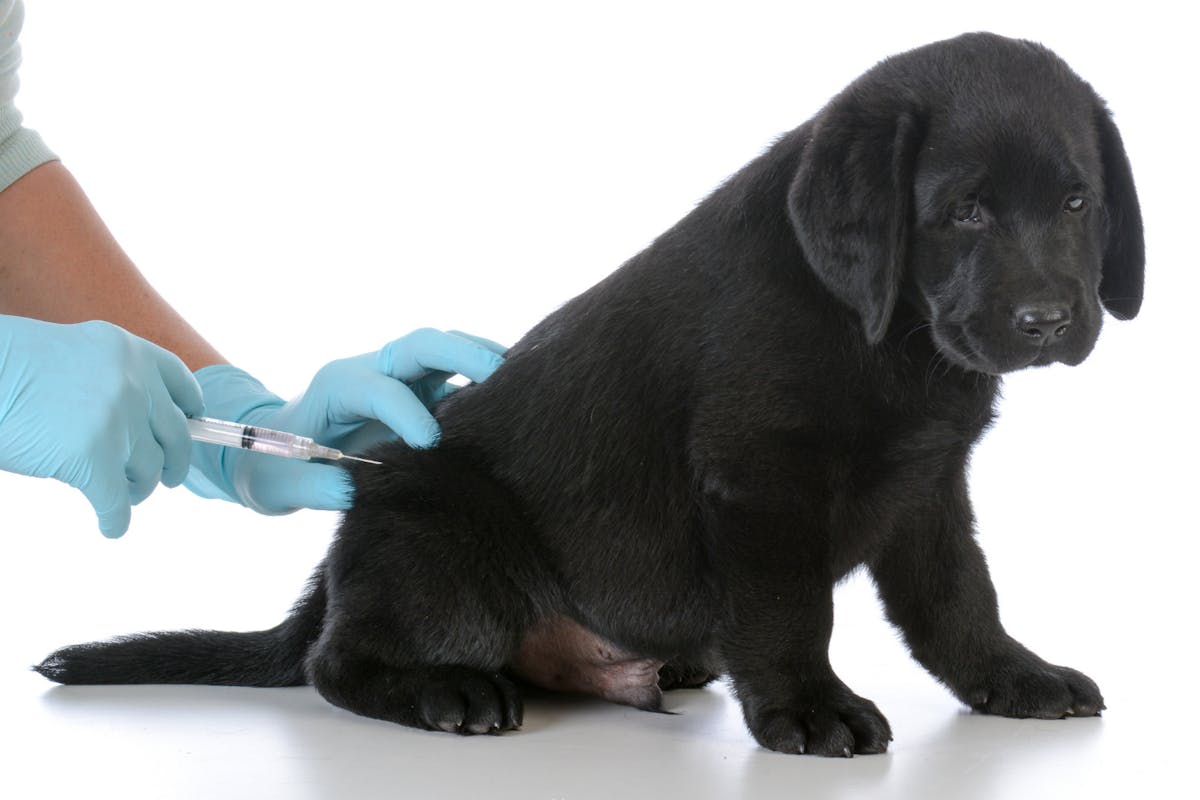
Good Dog is on a mission to educate the public, support dog breeders, and promote canine health so we can give our dogs the world they deserve.
Good Dog is on a mission to educate the public, support dog breeders, and promote canine health so we can give our dogs the world they deserve.
Q: At what age do you have your puppies vaccinated before they leave for their new homes? I have always had my pups vaccinated between 6 and 7 weeks of age; however, my puppies from the last couple litters experienced some GI tract issues for about a week following the vaccinations even though parasite screenings all came back negative and there were no issues prior to the vaccinations.
A: Vaccinations and when to give them can be very challenging as we want to do the right things for our puppies. We want to use distemper and parvovirus vaccinations to protect our pups, but at the same time, we don’t want them to experience adverse reactions to those shots.
Although it’s hard to know from your experience if the vaccinations caused your pups’ diarrhea since weaning diarrhea isn’t uncommon in pups. However, young pups have immature immune systems that may respond inappropriately to vaccines and diarrhea may result. Perhaps your pups would do better if you held off until 8-9 weeks before giving their first vaccination, assuming there is no over risk from parvo or distemper outbreaks.
Why is it challenging to know when to vaccinate our baby pups? Because of maternal protection or immunity! Litters vary when their maternal immunity runs out, thus allowing them to appropriately respond to the vaccines. As long as the pups’ maternal immunity stays high, they will not be able to respond to a vaccine.
Often we think that giving a shot automatically results in immunity, but vaccination does not equal immunization. Only when maternal immunity drops very low, will the vaccination immunize our pups. This usually happens at different times for distemper and parvo, and can range from the pup’s first week to 18 weeks of age.
Luckily, we now have a tool that can help us determine when it is most likely that a specific litter’s maternal immunity has dropped low enough. That tool is a vaccine antibody nomograph, which we usually shorten to nomograph. It’s easy to do by simply getting your bitch’s blood drawn several weeks out from whelping and the serum sent to the CAVIDS lab. The test cost is low, around $50 but it will let us estimate the antibody levels that have passed from the mother to her puppies via colostrum during their first day.
My suggestion is to start doing these on your bitches because giving vaccinations at the right time produces immunity. The nomograph report the lab sends lists your bitch’s distemper and parvo titers and then recommends a vaccination schedule for the pups based on those titers. Following this schedule and protecting your pups from the distemper and parvo viruses until their immunity has been confirmed with another titer, is the best way to get the most out of the vaccines you give.
Using the nomograph as a guide will give you better information on when the vaccine will be most effective, even though I recommend that you give at least one distemper-parvo vaccine before the puppy leaves for it’s new home. We will at least have information to shape when we give the next shot.
I recommend you read Using Canine Nomographs to Better Time Puppy Vaccinations, written by Gayle Watkins, Good Dog’s Head of Education. Please share it with your veterinarian, too. It has all the details about using vaccine nomographs for litters.
Additional information:
Canine nomograph evaluation improves puppy immunization
University of Wisconsin CAVIDS laboratory
Adverse events diagnosed within three days of vaccine administration in dogs, Moore GE, LF Guptil, et al. JAVMA 2005 (227:7,1102-1108) Link to abstract