Weaning

By
Good Dog is on a mission to educate the public, support dog breeders, and promote canine health so we can give our dogs the world they deserve.
Good Dog is on a mission to educate the public, support dog breeders, and promote canine health so we can give our dogs the world they deserve.
Good Dog is on a mission to educate the public, support dog breeders, and promote canine health so we can give our dogs the world they deserve.
Ending lactation period
Q: Any advice on weaning puppies would be appreciated, both for pups and mom. Our second litter is three weeks old and starting to get teeth. Their mom still has a lot of milk. Should we be decreasing her food and water intake? How many times a day should she be nursing them during this time? Last litter during weaning, she got an abscess on a nipple and it was a rough time. We don’t want this to happen again.
A: Weaning and ending lactation can be a challenging period when raising puppies. No two litters and no two mothers are exactly alike. Sometimes, it feels like just when I have things moving in a smooth groove, I hit a speedbump like you did with the abscess.
One of the things that can cause a mammary injury resulting in an abscess is sharp puppy nails. Keeping your puppy nails trimmed will help avoid any small scratches from the puppy nails, as well as irritation and possible surface infection. If the abscess was caused by mastitis, then perhaps you were weaning a bit too quickly and she was not emptied.
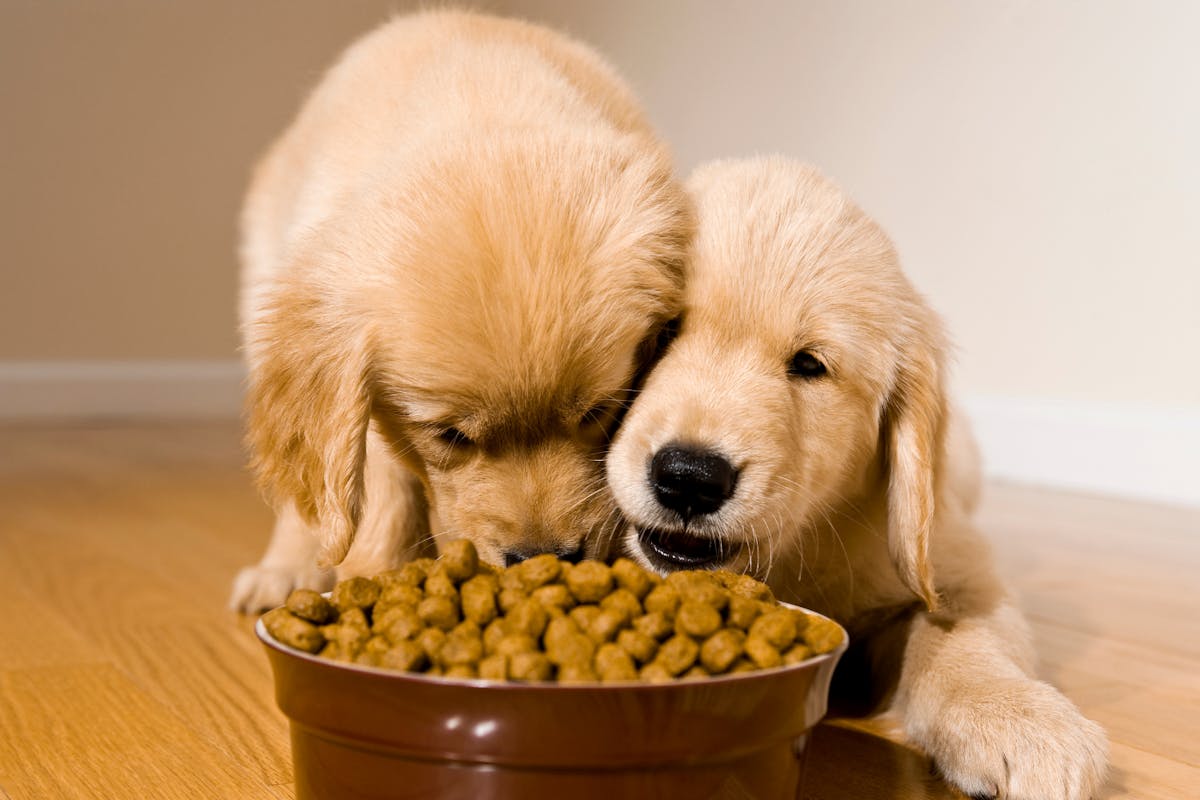
When I wean my puppies I introduce them to a gruel made of the same food that their mother is eating. I offer this once a day, then twice, and work my way up to four times a day over the course of four or five days. Then I continue to feed the puppies four times a day, cutting back to 3 times a day just before they are 8 weeks.
During this time period, I start decreasing my bitches food as well, but I do not restrict her water. Remember milk production is demand and supply, so as the puppies demand less her supply will also decrease. I have found that if girls are overproducing, by adding between 1 teaspoon and 1 tablespoon of dried rubbed sage to her food, depending on the dog’s size, I am able to decrease her milk supply to avoid problems more easily.
During the weaning time it is valuable to have the mom spend time with her puppies as she is teaching them important lessons, so I make sure that I give mom a way in and out of the area in order for her to come and go at will. Doing this helps her more easily wean and not be engorged. Some of my girls will literally nurse the puppies until the day they leave for their new homes, but this is more of a comfort nursing, not supplying the majority of the nutrition for the puppies.
Loose stool problem in puppies
Q: I tried to wean my last two litters onto a different dry food. Both litters had loose stools. They were checked for parasites so I believe the dry food was too rich for them. I start with goats milk then Esbilac 2nd Step. I gradually add dry food to the Esbilac until 8 weeks when they are totally on puppy dry food. Both litters’ soft stools were such that I had to put them on rice and chicken for a few days. I would like to hear what others use for their weaning protocol.
A: Finding the weaning routine for your pups may take some experimenting, but getting weaning diarrhea would push me to change something.
I have had my best success when I wean my puppies to the same food their mother is eating. Doing this has eased the transition from nursing to weaning.
When I wean my puppies, I also include a daily probiotic in their food. Using a probiotic has helped keep their stool firmer and helps with the stress of weaning.
I personally do not feed food dry to my pups; instead I always moisten it. Occasionally, I have used the Royal Canin puppy mousse with good success during weaning and goat’s milk formula to soften the kibble.
Constipated puppy
Q: What can I do for a 4-week old puppy that seems to be constipated?
A: Often when I have a puppy who is constipated that it is generally a sign of slight dehydration. I make sure that water is available and that if you are starting weaning that there is plenty of liquid in the food you are feeding as well.
I would also suggest giving the pup a sturdy probiotic or a little live-culture yogurt in case the pup’s gut flora has become unbalanced. That too can cause the extremes in puppy poop – either diarrhea or constipation.
If none of this is working, you can put a dab of Milk of Magnesia on the pup’s tongue several times or a day.
Finally, if needed, you can use a thin slice of a children’s glycerin suppository. Lube it with KY jelly and gently insert it into the pup’s rectum. Suppositories tend to work quickly, so be prepared for a bowel movement in 10-15 minutes.
Overweight puppies
Q: What do I do with 17-day old labrador puppies that are alarmingly overweight? They have proper footing and obstacles. Still, the puppies are gaining too much weight and have difficulty moving. Currently they are nursing five times in 24 hours and I've asked her to only allow one teat per feeding to prevent overeating. At 17 days, can they go to four feedings in 24 hours?
A: As a Labrador breeder myself I can understand that seeing these plush plump puppies can be something that you might want to do weight control on, but I would encourage you not to. At this age, they are still 100% nursing, and food deprivation is not beneficial to them, mentally or physically. You also might contribute to mastitis if you only allow one teat per puppy, which is not fair to your bitch. You need to allow the puppies to drain her so that does not happen.
At 17 days, my girls have unlimited access to their puppies. It is not structured time, and I am not controlling nursing. IF the mother is producing too much milk, I would slowly cut her food down. You can also use cool compresses and natural remedies such as grated cucumber or even 1 teaspoon to 1 tablespoon of rubbed sage in her food to reduce the milk production if needed. These are both taken from La Leche league and human medicine.
Instead of limiting nursing, I would encourage you to increase the pups’ physical demands. Make the puppies work to get to the dinner table. Start with good traction, as you mentioned. At 17 days, your pups should be up on all four and toddling around the box. If you see them slipping, improve the traction in the whelping box.
Then, create an “obstacle course” in the box with stuffed animals and things like rolled towels or split pool noodles under the whelping box fleece. You can also put egg-crate foam under the fleece. These will create the “mountains” your pups need to climb in the obstacle course and will put more of a demand on their bodies. These won’t cause them to lose weight but it will enable them to get stronger and more coordinated, avoiding “swimmer puppy syndrome.”
Finally, each time you or your team walk by the box, move the puppies away from their mom so they have to do the obstacle course to get back to dinner! All of this will give the pups more exercise to get them up and on their feet more often.
The good news is that the puppies will be introduced to solid food in just a little bit longer instead of nursing. They will also be much more active, using the food calories rather than storing them.