Getting your dogs physically prepared to breed and laying out your plan will increase the likelihood of a successful litter.
To prepare for your upcoming breeding, dig into this module’s content. Start with the Required Reading and listen to the Module 1 podcast. If you want to play with the Your Litter A to Z Calendar and Reminders, enter your bitches details here.
Some bitches are very regular in their cycles but most are not. This presents us a challenge as we try to figure out when our bitch is likely to come in next. Bitches vary widely in how often they come in season and how their seasons progress so it can be hard to predict when you’ll be doing a breeding. Our spreadsheet can help if you have the dates she has come in season in the past. Download the Tracking Heat Cycles spreadsheet to review your bitch’s past heat cycles and to get an idea of when she’ll come in next.
Your reproductive veterinarian or theriogenologist is an essential team member for most dog breeders. Good repro vets, who are knowledgeable and skilled but also respectful of you as a breeder, can be hard to find so start your search early. Interview vets to create a team that will best support you and your dogs. Use our Questions to Ask Repro Vets to guide your discussion. Most veterinarians who are interested in canine reproduction are members of the Society of Theriogenology. You can do a search for members from the link below. In addition, Good Dog has asked its breeders to recommend vets they have had success with.
Your bitch should have some vet exams prior to breeding to ensure she is in good health. We also recommend a reproductive-soundness exam once she comes in season, including a physical exam to ensure she doesn’t have a vaginal stricture or if she does, how you should handle breedings and whelpings. This exam can only be done when the bitch is in season so be prepared.
Choosing a fertile stud dog with good semen is important to your breeding success. The two ways to know if a stud dog is fertile are semen evaluations and current production, pups under 3 months of age. Watch Dr Hutch’s Good Dog webinar, listen to the Canine Health Foundations webinar on semen evaluations, and then get a semen evaluation done on the stud dog you plan to use.
The care that bitches and studs get before breeding, in fact through much of their lives, sets them up to breeding more easily, have more healthy puppies, and raise those pups well.
The majority of bitches will benefit from being dewormed prior to breeding. You want to be sure she is free of all intestinal parasites, such as round, whip, hook and tapeworms, as well as coccidia and giardia. Start by running a fecal test now so you can complete deworming if needed before she comes in season and/or you breed your dog. However, know that bitches can carry and transmit roundworms to their pups even if they themselves test clear. Read more about this phenomenon in Deworming Dogs and Puppies.
Put your bitch (and stud dog) on a reproductive diet at least 3 months before the breeding, if possible. Otherwise, do so as soon as possible before the breeding. Be sure that diet includes docosahexaenoic acid (DHA), an important Omega 3 fatty acid.
Dogs and bitches often need to undergo a lot of handling and procedures during breedings. This includes examinations, blood draws, taking pills, semen collections, artificial inseminations, and more. Teaching your dogs to tolerate handling now will reduce their stress and improve your breeding success.
Physical fitness is critical not only to successful breedings, pregnancies, and puppy rearing, but parental fitness has lifetime implications for puppies’ health and temperaments. Longer walks aren’t the answer so instead focus on strength training and improving flexibility, balance, and proprioception. Optimize your dogs’ fertility with Fit To Be Tied, the only conditioning program specifically for breeding dogs.
Watch the Effects of Prenatal Food Amounts, Physical Condition and Fitness, C-Sections, and Toxins on Puppies:
Bitches’ seasons vary widely from year to year. Even if she has been regular in the past, it isn’t unusual for bitches to go 10 or even 12 months between seasons so there is most likely not a physical problem if she isn’t in at 6 months. However, sometimes we can help Mother Nature along to bring girls in. Many seasoned breeders will tell you that the fastest way to bring a bitch in is to put money down on a non-refundable vacation, plan a wedding, or enter a long show weekend that doesn’t offer refunds for bitches in season ;-). But all kidding aside, there are some things you can try to help your girl come in more quickly. None are foolproof but may be worth the effort.
Among the safest way to bring a bitch into season is to have her live with another bitch that is in proestrus or estrus. This is called the “Dormitory Effect” and although the research is mixed, there is tons of anecdotal evidence that bitches in close proximity tend to cycle together. So that’s your first step.Some breeders have had success bringing their bitches in with two nutritional supplements. There are no research studies supporting these but many breeders use:
We don’t necessarily recommend using medical treatments to bring bitches into season but understand that there can be good reasons to do so. If your bitch is 6 months past the start of her last season, there are three drugs available to bring her into season. Read Estrus Induction in Dogs: Approaches, Protocols and Applications, P.W. Concannon from the 2005 World Small Animal Veterinary Association World Congress Proceedings.
Cabergoline. a very safe drug with minimal side effects. It is available by prescription through Revival and requires a prescription from your vet. Dosing calculator to discuss with your vet is here.
PG600. Available over-the-counter through Revival and other sources. This is an off-label use of a product licensed for swine. This should only be used under the advice and supervision of your veterinarian.
Deslorelin (Ovuplant). Very limited availability in North America but more commonly used in Europe. More on deslorelin here.
Section 1: Pre-Breeding
Section 2: Pregnancy & Whelping
Section 3: Litter Management: Month 1
Section 4: Litter Management: Month 2
Join for free access to Good Dog Breeding Foundations ($245 value)
8 hand-selected courses to help you get ready to breed:
Using pedigrees to produce better dogs
Evaluating your puppies
Basic dog contracts & more!

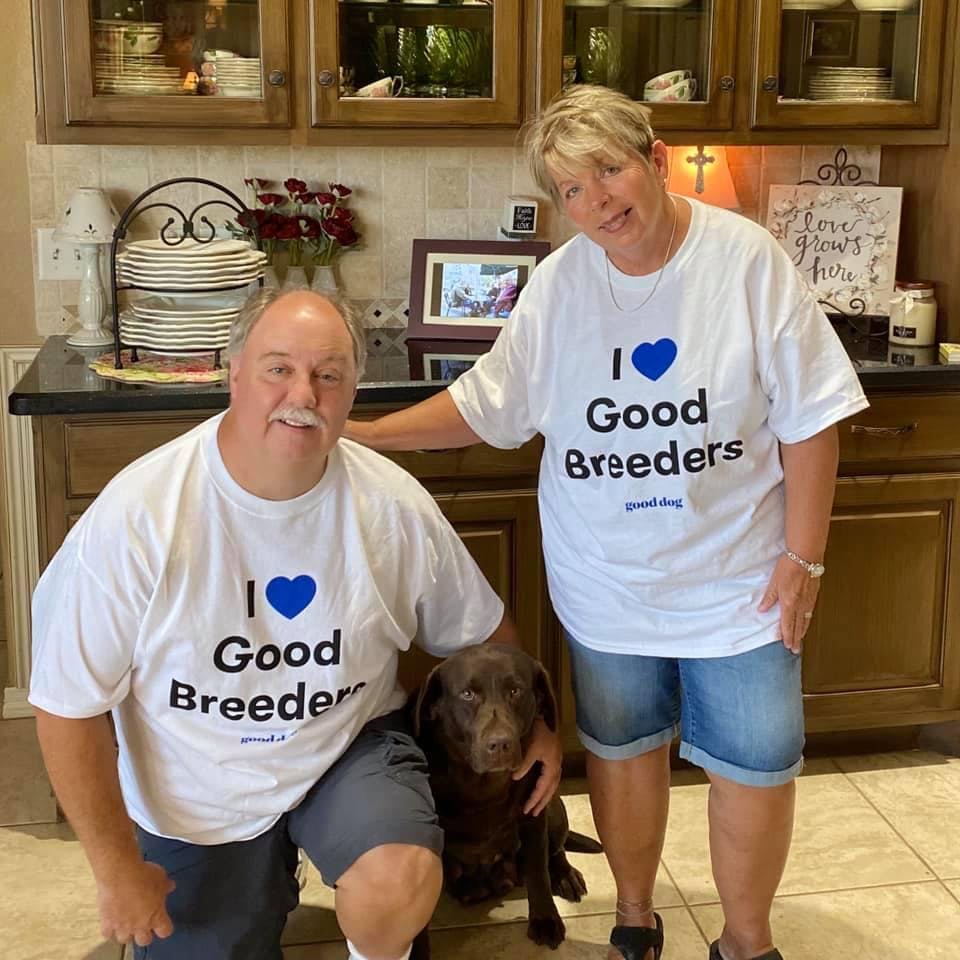
Becoming a member of Good Dog was the best thing to happen to our program! Even as experienced breeders, the education, legal resources and litter management system Good Dog provides, give us the support we need for the future.
– Alana & Kelly Curry, Good Breeder, Puppies Unleashed