Coprophagia
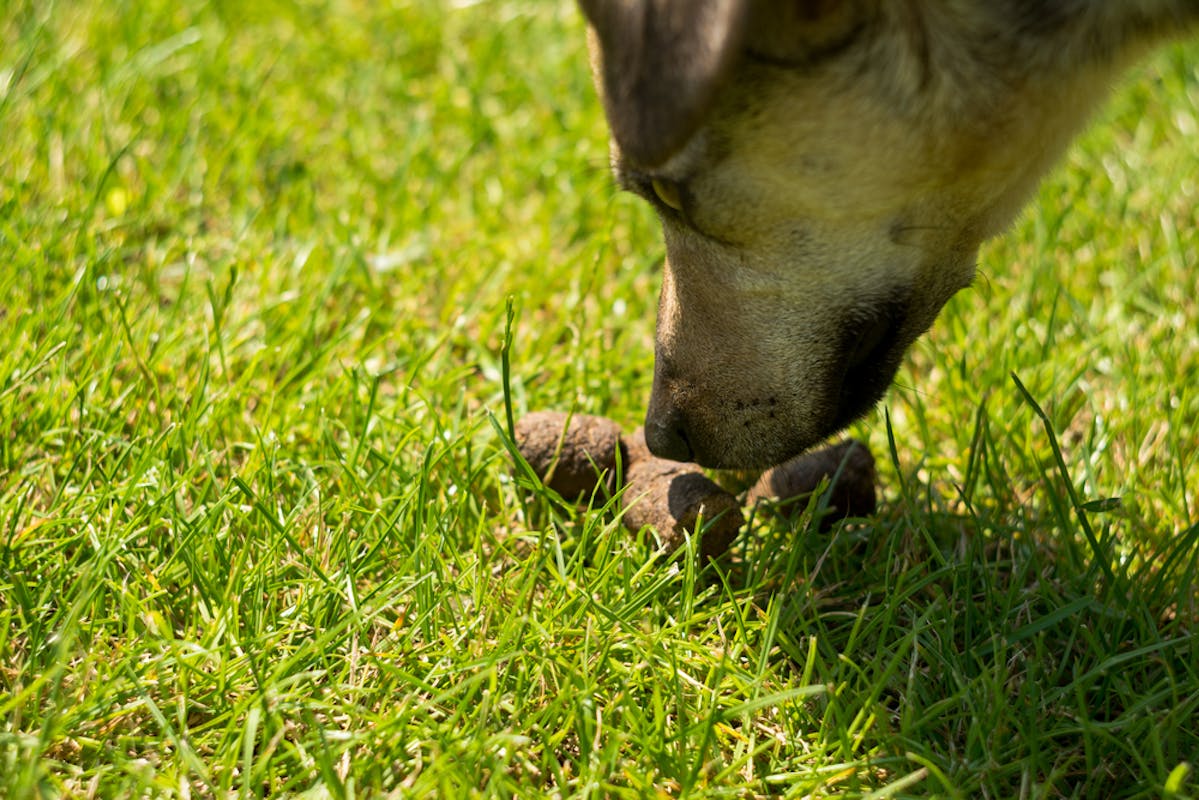
When your dog eats poop
Good Dog is on a mission to educate the public, support dog breeders, and promote canine health so we can give our dogs the world they deserve.
Good Dog is on a mission to educate the public, support dog breeders, and promote canine health so we can give our dogs the world they deserve.
Good Dog is on a mission to educate the public, support dog breeders, and promote canine health so we can give our dogs the world they deserve.
By Dr. Mikel Delgado, PhD
What is coprophagia?
Simply put, coprophagia is the consumption of feces (stools, poop). Survey-based research suggests that approximately 25% of all dogs have been observed eating feces at least once, but many of these dogs do so regularly if they have access. Some dogs only eat their own feces, some only eat the feces of other dogs, and some dogs will eat the feces of other species (such as cats or deer).
Why do dogs eat poop?
To an extent, poop-eating is normal behavior for dogs! For example, mother dogs have an instinct to keep their nesting area clean, and they clean up their puppies’ poop by eating it.
In some cases, coprophagia may be associated with an extreme nutrient deficiency or digestive problem, although that is not believed to be the most common reason that dogs eat poop.
Dogs may eat poop in response to stress, anxiety, boredom, or even for attention. And some dogs may just enjoy the taste, which can make it a hard habit to break! The risk for coprophagia increases when dogs live with other dogs - perhaps simply because there’s more dog poop available to eat! Dogs also seem to be much more interested in consuming fresh stools.
A 2018 study found no consistent effect of dog age, diet, or housetraining on the tendency to eat feces.
Is coprophagia dangerous?
The biggest risk to coprophagia is that it potentially exposes your dog to bacteria or parasites from eating infected stool. It’s also possible that your dog could pass those bacteria on to you if you let your dog lick your hands or face. There’s also a slight risk if a dog eats the stool of an animal taking medications (for example, pain medication), that the dog might absorb some of those medications into their bloodstream.
My dog is eating poop - what do I do?
If your dog is eating feces, it’s a good idea to let your veterinarian know; they might want to do some basic diagnostics such as bloodwork, to rule out problems and make sure your dog is healthy.
If your dog is eating poop due to stress, anxiety, or boredom, then you must address the underlying situation. A veterinary behaviorist or dog behavior consultant can help you assess your dog’s environment and lifestyle and help you address any issues that may cause your dog to eat poop.
Slowing down your dog’s feeding with a slow-feed bowl or food puzzle may prevent boredom and improve digestion. In some cases, a change in diet may be helpful; your veterinarian can advise you as to what foods might help your dog feel more satisfied.
How can I stop my dog from eating poop?
The best way to stop your dog from eating poop is to limit their access to poop! If your dog defecates in an enclosed yard or when you are walking, be sure to clean up the feces immediately. Likewise, have your dog on a harness and lead when you are walking to make sure they don’t have access to any feces on the streets. If you have cats in your home, it’s a good idea to have the litter boxes in a room separated from dogs, blocked off with a cat-friendly dog gate.
Some people have luck teaching their dog to “leave it” or “trade” a poop for a better treat, or by rewarding their dog for not eating poop that they encounter. Punishing or yelling at your dog may have the counterintuitive effect of causing your dog to ingest the feces even faster, so any type of punishment is unlikely to stop the behavior.
What about commercially available deterrents? Research has found that these products may help the occasional dog, but overwhelmingly, they are ineffective in stopping coprophagia.
Resources
Amaral, A. R., Porsani, M. Y. H., Martins, P. O., Teixeira, F. A., Macedo, H. T., Pedrinelli, V., ... & Brunetto, M. A. (2018). Canine coprophagic behavior is influenced by coprophagic cohabitant. Journal of Veterinary Behavior, 28, 35-39.
Hart, B. L., Hart, L. A., Thigpen, A. P., Tran, A., & Bain, M. J. (2018). The paradox of canine conspecific coprophagy. Veterinary medicine and science, 4(2), 106-114.

Join our Good Breeder community
Are you a responsible breeder? We'd love to recognize you. Connect directly with informed buyers, get access to free benefits, and more.