Canine cardiac evaluation and registration with OFA
A step by step guide to testing your dog for heart disease
by Rachel Abromitis, Rachel Jefferds, and Dr. Nate Ritter, DVM
OFA Cardiac Databases for Dogs
The OFA maintains two separate and distinct cardiac databases; the Basic Cardiac Database and the Advanced Cardiac Database. The purpose of the databases is to gather data regarding heart diseases in dogs, and to identify dogs which appear to be clinically normal prior to use in a breeding program.
- Jump to How do I get my dog screened and registered with the OFA Basic Cardiac Database?
- Jump to How do I get my dog screened and registered with the OFA Advanced Cardiac Database?
There are two categories of heart disease. Congenital cardiac disease in dogs is a malformation of the heart or great vessels with defects present at birth and/or develop during the neonatal period. Many congenital heart defects are thought to be genetically transmitted from parents to offspring. However, the exact modes of inheritance have not been precisely determined for all identified cardiovascular abnormalities.
Adult-onset (or developmental) cardiac diseases develop later in life. Acquired disease can appear at any time in a dog’s life even if they have had a normal cardiac examination in the past. Therefore, cardiac evaluations are only valid for one year and need to be repeated annually.
More information on common cardiac conditions and breeds commonly affected can be found here.
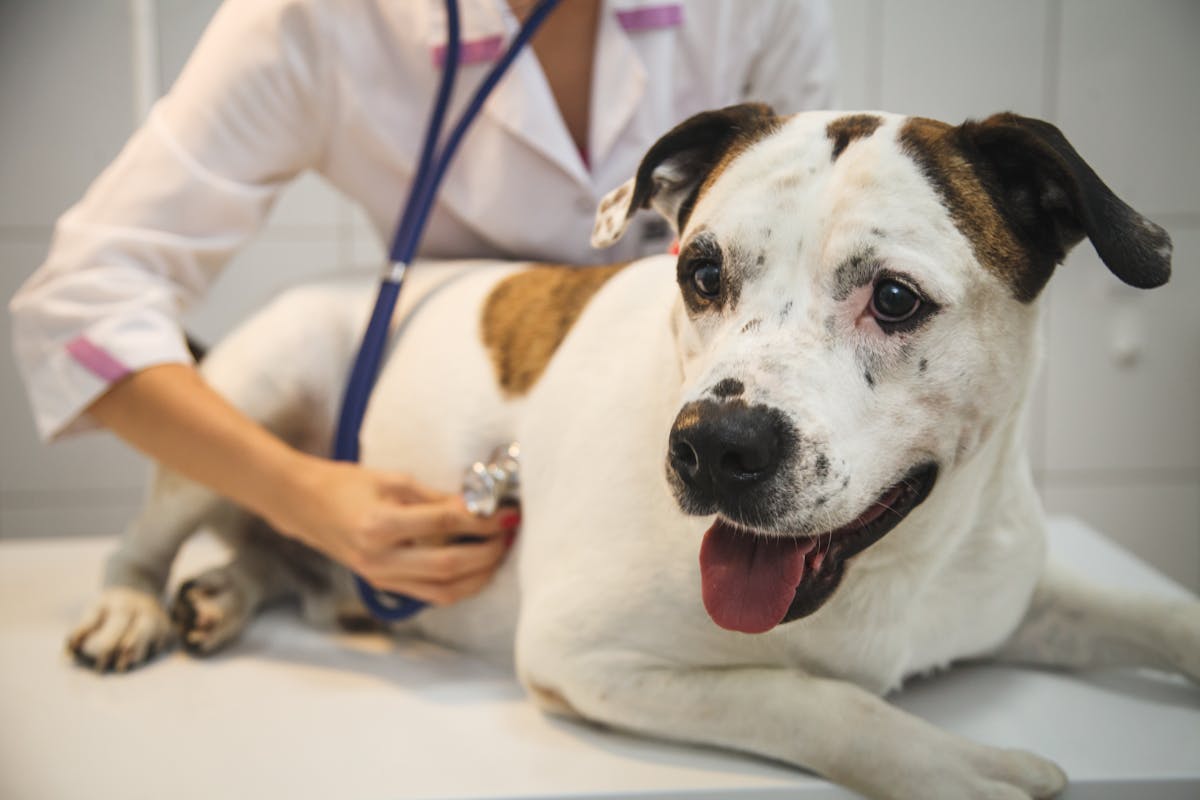
Cardiac auscultation is the primary screening method for appreciating a heart murmur and associated cardiac disease in dogs. While there are exceptions, virtually all heart disease is associated with the presence of a murmur, abnormal heart rate, or irregular rhythm. The examination can be performed by a general practitioner however, auscultation by board-certified cardiologist with specialized training is recommended. Results can be registered with OFA in the Basic Cardiac Database.
In order to meet the criteria for inclusion in the Advanced Cardiac Database both an auscultation and an echocardiogram must be performed by a board-certified cardiologist.
When planning for your cardiac screening be sure to check the requirements for your breed established by the parent club which will specify what type of evaluation (Basic or Advanced) is required and whether an examination by a cardiologist is required for the Basic evaluation. Diplomates of either the American College of Veterinary Internal Medicine (ACVIM) or the European College of Veterinary Internal Medicine (ECVIM) are qualified to perform the Advanced cardiac evaluation. Help finding a specialist in your area can be found here.
Note: Registration of test results is imperative for advancing canine health. Data from health registries support research efforts into canine diseases, establish validated diagnostic criteria, and maintain the reported test results in a reliable public database. Registered data can be used to identify newly emerging conditions, monitor the efficacy of interventions in decreasing the prevalence of conditions, and help breeders make informed breeding decisions.
How do I get my dog screened and registered with the OFA Basic Cardiac Database?
Step 1
Create an appointment with your veterinarian or a board-certified cardiologist. Please download, print, and bring the OFA form to your appointment https://www.ofa.org/application-forms
Step 2
The veterinarian will need to perform a cardiac exam which will include auscultation (listening with a stethoscope).
Examination note for Veterinarians (per OFA): The examiner should auscultate gradually across all valve areas and also over the subaortic area, ascending aorta, pulmonary artery, and the left craniodorsal cardiac base. Following examination of the left precordium, the right precordium should be examined. Any cardiac murmurs or abnormal sounds should be noted.
Step 3
The veterinarian will complete and sign the application form for OFA indicating the results of the dog’s cardiac evaluation.
Step 4
Once the application form is completed it is ready to be sent to OFA along with the associated fee. The form and the fee will need to be sent in by the owner/breeder.
Send to: Orthopedic Foundation for Animals
2300 E Nifong Blvd
Columbia, MO 65201
Phone (573) 442-0418; Fax (573)875-5073
Step 5
Once received by OFA, a breed registry number will be issued for any dog found to be normal for cardiac disease at 12 months of age or older. The breed registry number will indicate the age at the time of evaluation and the type of examiner (C-cardiologist, S-specialist, and P-practitioner). Since acquired disease can develop at any age, the evaluation will only be valid for one year.
How do I get my dog screened and registered with the OFA Advanced Cardiac Database?
Step 1
Create an appointment with a board-certified cardiologist. Help finding a specialist in your area can be found here.
Step 2
The veterinarian will perform the auscultation and echocardiogram, which is an ultrasound of the heart’s valves and chambers.
Note: Doberman Pinschers and Boxers require a Holter test within 90 days of the cardiologist’s examination which uses electrodes and a tracking device to track the heart rhythm of the dog. More information can be found here.
Step 3
A multipart form will be filled out, which is only available from the attending veterinary cardiologist which will indicate the results of the examination. The form and fee will need to be submitted to OFA by the owner/breeder.
Send to: Orthopedic Foundation for Animals
2300 E Nifong Blvd
Columbia, MO 65201
Phone (573) 442-0418; Fax (573)875-5073
Step 4
Once received by OFA, a breed registry number will be issued for any dog found to be normal for cardiac disease at 12 months of age or older. The breed registry number will indicate the age at the time of evaluation. Since acquired disease can develop at any age, the evaluation will only be valid for one year.
Note: Clearances (Basic or Advanced) through OFA are only given to dogs 12 months of age or older. Owners are welcome to test dogs under 12 months of age, however these will be considered preliminary evaluations and not be issued a number in the database.
Abnormal Cardiac Grades:
It is advised and encouraged to submit all evaluations to help maintain accuracy within the cardiac database as well as help understand patterns of inheritance in canine congenital and early onset heart disease. There is no OFA fee for entering abnormal evaluations into the database and abnormal results will not be released to the public database unless permission is given by the owner.
Fee Schedule (as of July 2022):
Note: There is an initial OFA fee however there is no charge for recertification at a later age.
- Dogs 12 months or older: $15 each
- A litter of 3+ dogs submitted together: $30 total
- Kennel Rate (5+ dogs submitted together): $10 each



Join our Good Breeder community
Are you a responsible breeder? We'd love to recognize you. Connect directly with informed buyers, get access to free benefits, and more.