Testing and registering your dog for tracheal hypoplasia
Making sure that your dog's windpipe is uniform and the right size.
Good Dog is on a mission to educate the public, support dog breeders, and promote canine health so we can give our dogs the world they deserve.
Good Dog is on a mission to educate the public, support dog breeders, and promote canine health so we can give our dogs the world they deserve.
Good Dog is on a mission to educate the public, support dog breeders, and promote canine health so we can give our dogs the world they deserve.
By Dr Mikel Delgado, PhD
Tracheal Hypoplasia is a condition most likely to be observed in young, brachycephalic dogs, such as Bulldogs and Boston Terriers. In these dogs, there is abnormal growth of cartilage in the trachea (windpipe), resulting in a narrower windpipe than is observed in an unaffected dog. The most common signs of Tracheal Hypoplasia are labored, noisy breathing, and general respiratory symptoms (e.g., wheezing, coughing). You may also observe lethargy, and changes in eating/drinking habits. Dogs with Tracheal Hypoplasia are more susceptible to pneumonia.
The causes of Tracheal Hypoplasia are not well understood, but due to its breed association, it may be genetic and dogs with Tracheal Hypoplasia should not be bred.
Testing
Dogs can be tested and registered for Tracheal Hypoplasia once they are at least 12 months of age.
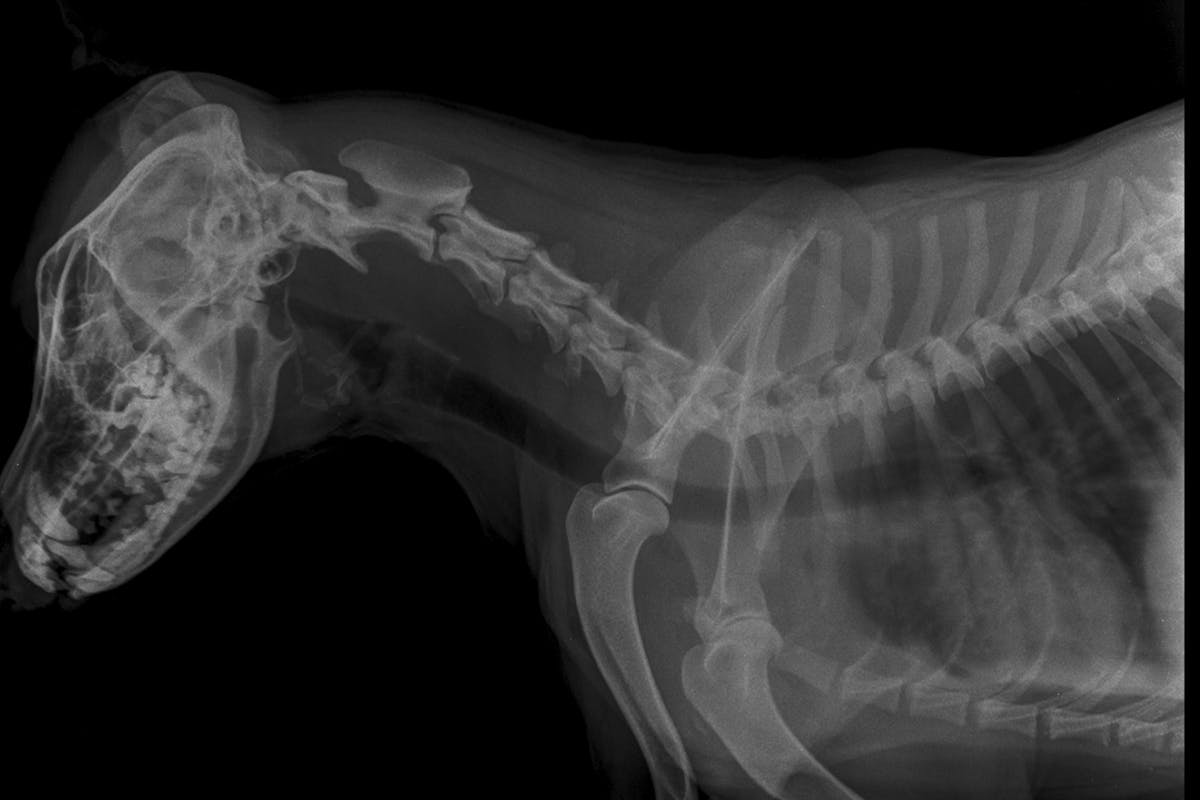
The test can be performed by a licensed veterinarian, and requires an x-ray of both the cervical and thoracic areas of the trachea. X-rays should be taken when the patient is awake and at peak inspiration.
Step 1
Schedule an appointment with your veterinarian. Download, print, and bring the OFA form to your appointment (found here).
Step 2
Your veterinarian will take x-rays of your dog. Be sure to have all the appropriate paperwork ready for your veterinarian to complete.
Step 3
Your veterinarian will complete and sign the application form for OFA, identify the radiograph with your dog’s registration name or number, the date of the radiograph, and the veterinarian’s name or hospital name.
Note: It is recommended that the permanent identification of the dog (e.g., tattoo, microchip) is verified by the veterinarian at the time of the evaluation.
Step 4
Once the application form is completed either you or your veterinarian will then submit the radiographs via one of the methods listed here. The owner should indicate if they give permission for any abnormal findings to be reported in the health database.
Note: The radiograph, application and fees will need to be sent together, either by your veterinarian or yourself, depending on method of submission.
Send to: Orthopedic Foundation for Animals
2300 E Nifong Blvd
Columbia, MO 65201
Phone (573) 442-0418; Fax (573)875-5073
Fee schedule (as of July 2022)
Note: this does not include the cost of your veterinary exam and radiographs
For Dogs 12 months or older: $35 each
Step 5
A Board Certified Radiologist will review the x-rays, subjectively evaluating tracheal size and uniformity. They also provide an objective evaluation based on the ratio (TLR) of the tracheal lumen diameter at the thoracic inlet to the width of the proximal third rib.
If dogs are at least 12 months of age, have a normal evaluation of the tracheal size and uniformity, and a TLR greater than or equal to 2.0, they can receive an OFA certification and number. Indeterminate cases will be reported as equivocal, and abnormal cases will be reported as hypoplastic.

Join our Good Breeder community
Are you a responsible breeder? We'd love to recognize you. Connect directly with informed buyers, get access to free benefits, and more.