Registration with the OFA Sebaceous Adenitis Database
Hair loss, dandruff, scaling or “crusting” of the skin? Your dog may have sebaceous adenitis.
Good Dog is on a mission to educate the public, support dog breeders, and promote canine health so we can give our dogs the world they deserve.
Good Dog is on a mission to educate the public, support dog breeders, and promote canine health so we can give our dogs the world they deserve.
Good Dog is on a mission to educate the public, support dog breeders, and promote canine health so we can give our dogs the world they deserve.
By Dr. Mikel Delgado, PhD
Sebaceous adenitis is a hereditary condition that results in inflammation of the sebaceous glands. The most common signs are hair loss, dandruff, scaling or “crusting” of the skin, as well as changes in the coat texture and quality. The dog may or may not feel itchy.
Some dog breeds are predisposed to sebaceous adenitis, including Standard Poodles, Akitas, Chow Chows, and Samoyeds. At least in the case of Standard Poodles, sebaceous adenitis is believed to be caused by a recessive gene.
Although we think that sebaceous adenitis may have a genetic cause, the genes which are responsible have not been identified yet so there is no DNA test for it at this time. Instead, diagnosis relies on a skin biopsy. Dogs must be at least 12 months of age to be registered in the OFA database. Re-testing for breeding dogs is recommended every 1-2 years because there is no consistent age of onset.
How do I get my dog screened and registered with the OFA?
Step 1
Schedule an appointment with your veterinarian. Download, print, and bring the OFA form to your appointment (found here). Note that there will be a fee from your veterinarian for the appointment and separate fees for (1) laboratory analysis of the sample and (2) OFA registration.
Step 2
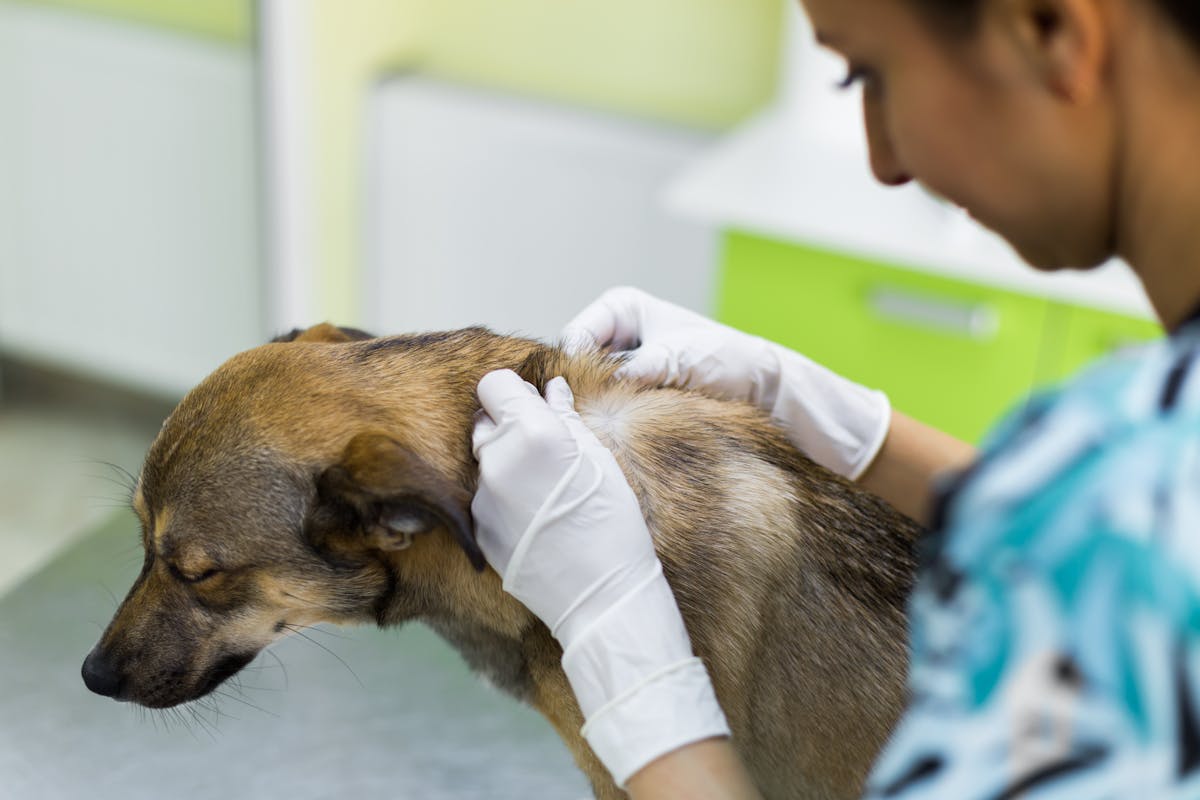
Your veterinarian will take a sample of your dog’s skin from the back of his or her head. They may apply a local anesthetic to your dog’s skin so that the procedure is painless. The veterinarian will carefully place the sample into a leak and crush-proof container with a preserving solution. They may use sutures to close the sampled area of your dog’s skin.
Note: Avoid shampooing your dog at least two weeks prior to your appointment.
Step 3
The application, sample, laboratory fee and OFA fee should be sent to one of the OFA approved labs.
Step 4
The lab results and final diagnosis are returned to the OFA and to the owner. Results are classified as:
- Normal No evidence of sebaceous adenitis at the time of the evaluation
- Affected Clinical and biopsy evidence of sebaceous adenitis
- Subclinically Affected The dog has normal skin and hair coat, but has biopsy evidence of sebaceous adenitis
- Equivocal Some inflammation is present, but the cause cannot be determined – retesting recommended in 3 to 6 months
Fee schedule (as of July 2022)
Note: this does not include the cost of your veterinary exam and biopsy
- Dogs over 12 Months: $15
- A litter of 3+ dogs submitted together: $30 total
- Kennel Rate (5+ dogs submitted together) $10 each
Note: Registration of test results is imperative for advancing canine health. Data from health registries support research efforts into canine diseases, establish validated diagnostic criteria, and maintain the reported test results in a reliable public database. Registered data can be used to identify newly emerging conditions, monitor the efficacy of interventions in decreasing the prevalence of conditions, and help breeders make informed breeding decisions.
Join our Good Breeder community
Are you a responsible breeder? We'd love to recognize you. Connect directly with informed buyers, get access to free benefits, and more.