How To Prepare Your Home for a New Puppy
Make sure your home is ready for your brand new family member

By
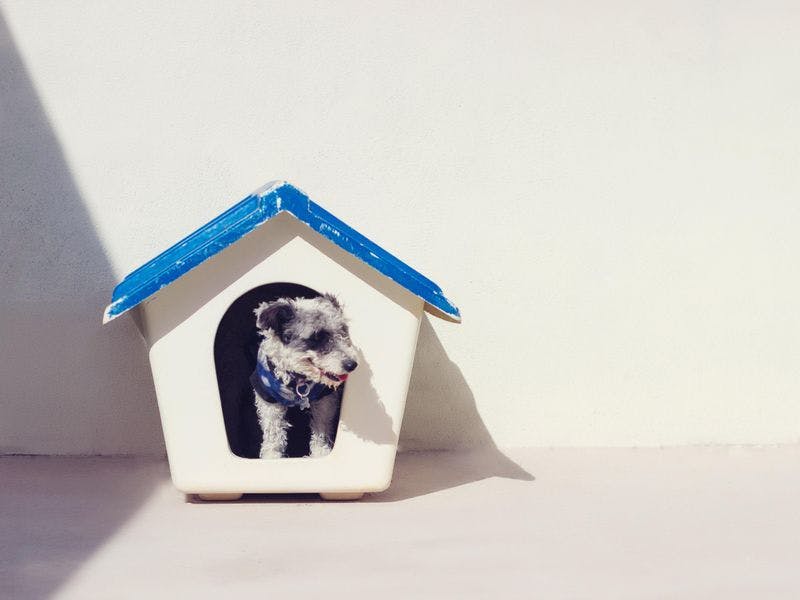
The exciting moment in your journey to find a pup has finally come–you’re getting ready to welcome your new pup into your home! Bringing home your pup will feel very similar to bringing home a young child. They can’t quite control their bladders yet, they rely on you to provide food and water, and need your full concentration and attention — if only to keep them out of trouble.
Here are a few ways to make sure your home is ready for your brand new family member.
Set up your space for your pup
- If you’ve decided to crate train your puppy, set up that area before your pup comes home. You’ll need a crate (either plastic and covered, or an open wire frame) big enough for them to stand up and turn around when inside. Get a soft bed or towels to fit inside the crate for them to sleep on.
- Have potty training pads in key areas around your space. Although pee pads may visually encourage indoor elimination at first, having them on-hand for your puppy’s first few nights may be helpful. Check out our guide to potty training your puppy for more information.
Have supplies on hand
The basics: food, treats, and toys.
- Start by feeding your puppy the same food they were eating at their first home: your breeder can let you know what to have on hand. Be sure to transition to any new foods gradually.
- If your pup enjoys a certain kind of toy over others (i.e. they don’t like toys with squeakers in them or maybe they prefer bouncy toys), have a few on hand (and see our article on play and enrichment!).
- You will want treats for training and positive reinforcement. To be safe, use your puppy’s breed-appropriate kibble size as a rough guideline for how large treats should be.
Be ready for walks
- Have your puppy’s harness and leash, and poop bags handy!
- Discuss with your breeder what kind of collar or harness is best for your dog’s breed.
- If you live in a colder climate, you’ll need to get a well-fitting coat and booties to protect your dog from the wintry elements. In a warmer, sunny climate you might need to get your dog paw protectors from hot asphalt!
- Check with your veterinarian about whether your puppy has all necessary vaccinations to safely walk in public areas.
Cleaning supplies
- In case of accidents, you’ll want a pet-safe enzyme cleaner that’s made to clean urine
Soft places to sleep
- Be sure to have a few soft beds or blankets around for your pup to sleep in and with. Puppies require lots of sleep thanks to their active lifestyles and will benefit from designated places to crash.
Puppy Proofing
Change your perspective to your puppy’s point-of-view, and clean/remove items that are on their level.
It may feel silly, but try crawling around on your hands and knees to view your home from your dog’s level. See anything that needs tidying up? Need a new place to store your shoes so they don’t get chewed on? Take some time to imagine being your puppy in your home to see if anything needs fixing.
Get child-proof locks for drawers and cabinets, especially if they have a knob.
Simply put: puppies tend to get into things they’re not supposed to. This is especially necessary for storing cleaning chemicals or any substances that are dangerous for animals.
You may need extra (human) food storage or to re-arrange your kitchen
Is your food stored in open shelves or cabinets? Do you keep any kind of chocolate (toxic to dogs) low to the ground? Before your puppy comes home, take a look at your kitchen and other food storage areas and minimize the risk your puppy faces there. Put easily penetrable packages up high, or start using cabinets that fully close to prevent as many accidents as possible.
See our guide to puppy proofing for more details!
Management
- Agree on the plan and the schedule for your new puppy: All family members should be on board for your puppy’s potty and sleep schedules. Take your puppy outside to potty soon after eating or drinking anything, and then about every 1-2 hours during the day. (Generally speaking, puppies can hold their bathroom urges for 1 + how many months old they are. A two month old puppy should be taken out to potty about every 3 hours)
- Have other pets or small children? Have a plan for introductions. Your puppy will likely be excited to meet everything and everyone, but too much excitement or over-stimulation can lead to frayed nerves and bad experiences. Slow, supervised interactions are best for everyone involved, no matter how old they are. .
- It can be difficult to keep an eye on your pup at all times. An exercise pen, typically an enclosure that’s bigger than your dog’s crate but made of the same material and with an open top, can contain your puppy with some of their toys and maybe a bed in a safe space so you can watch them while you do other things.
- Be prepared to enroll your puppy in puppy classes and doggy daycare if needed.
Welcome home, pup!
These are just the basics for preparing your home for a new puppy. If you get overwhelmed during the preparation stages, we have lots of helpful resources in our Learning Center. It truly takes a village to raise a puppy, and don’t forget you have a ton of people in your corner to turn to for help. Your breeder can guide you through those early weeks at home with your pup, and your veterinarian and the trainers you’ll be working with can also give you great advice to help you take the best care of your puppy.