Blue Line Doodles of Arizona


- Sun City, AZ ·
- Responds within a few days
Upcoming litters


Expected Australian Labradoodle litter
Due Feb. 2026

Planned Australian Labradoodle litter
Due Oct. 2026
Meet the breeder
I'm April W., the breeder behind Blue Line Doodles of Arizona located in Sun City, AZ. Authentic Australian Labradoodles in our program are all multigenerational, with some of our lines going back 12 generations and beyond. We take pride in breeding dogs that surpass health, structure, and temperament standards. Our focus is on maintaining and improving these exceptional breed lines. We breed primarily miniatures, with occasional large minis and small mediums. Our color palette includes apricot, red, chocolate, black, and phantom. Each of our puppies is raised using the Puppy Culture curriculum, giving them an early advantage in life. The early neurological stimulation they receive during the first weeks boosts their health and enhances their ability to adapt to new environments. Our puppies are given lots of love and attention, with potty training starting at 3 weeks and crate training at 5 weeks. By 10 weeks old, they’re healthy, happy, and ready to join their forever families.

Q. & A. with April
Why did you start breeding?
After years of research, we discovered the Australian Labradoodle, a breed that truly stands out in every way. We found a reputable breeder of authentic Australian Labradoodles & brought home our first girl. Over the next two years, we completed all necessary health testing, registered her with WALA, and worked closely with our mentor to make sure we were fully prepared for the journey ahead.What makes your program special?
At Blue Line, our mission from the start has been to provide the highest quality, hypoallergenic dogs to first responders, veterans, and anyone seeking a dog with service dog qualities. For this upcoming litter, we are especially proud to partner with two programs to provide a service dog to a first responder at no cost to them-100% funded by donations. This is the true purpose behind what we do.What are the different breed sizes in your program?
Our puppies are miniature size. Sizes will vary depending on the parent dogs.What are the different breed coat colors in your program?
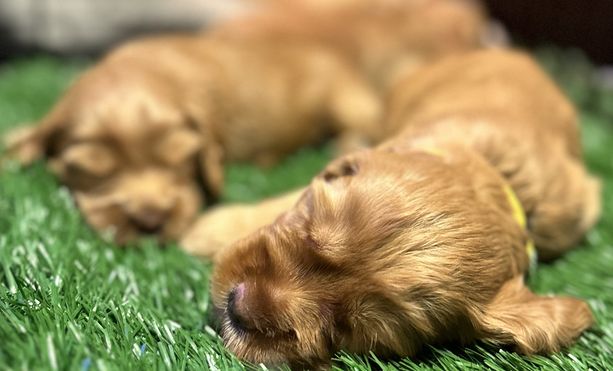
Our puppies include caramel cream, caramel, caramel red, apricot, and chocolate. Colors will vary depending on the parent dogs.Where do your breeding dogs live?
They live in my home.

Matched dogs
These dogs are already reserved or have gone home.

Juliet
Went homeFemale
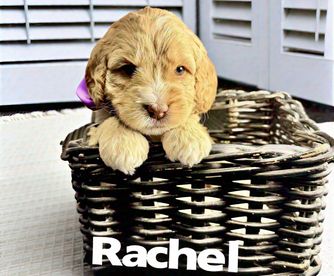
Rachel
Went homeFemale
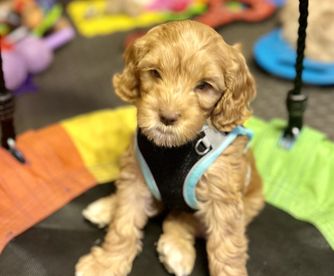
Beth
Went homeFemale

Lucy
Went homeFemale
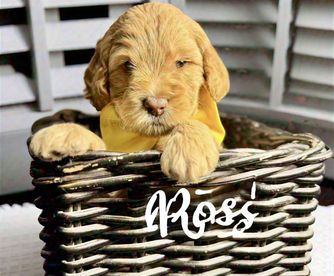
Ross
Went homeMale
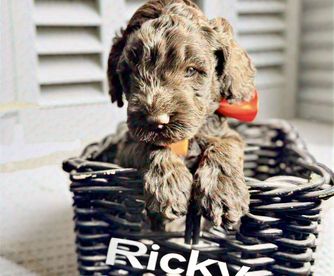
Ricky
Went homeMale
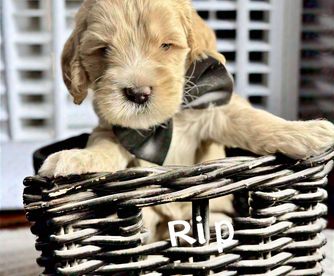
Rip
Went homeMale
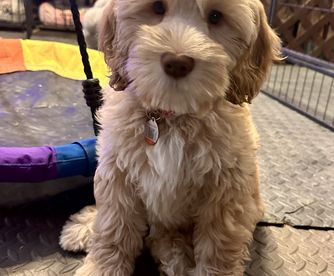
Romeo
Went homeMale
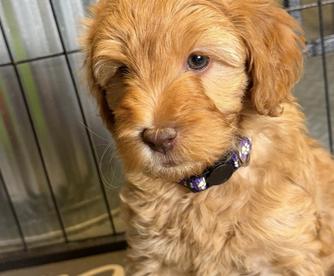
Ginger
Went homeFemale

Rubble
Went homeMale

Rocky
Went homeMale
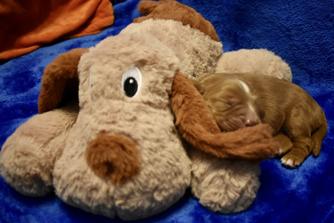
Chase
Went homeMale

Marshall
Went homeMale

Tracker
Went homeMale

Ryder
Went homeMale
Getting a puppy from April
April has been certified by Good Dog’s screening team for responsible and trusted breeding practices. When you’re ready, reach out to ask about the puppies or anything else on your mind. You’ll get to know each other through messaging, phone, or video and pay securely, all on Good Dog.
After buyers complete the application and screening process, April partners with them to find the best puppy match.
“We allow puppy picks at appropriate 6-7 weeks of age. Picks are done in order of deposits placed. We spend a great deal of time on calling with potential buyers to find the right fit for their lifestyle ”
Price
“Each puppy comes with a two-year genetic health guarantee, is microchipped, vet-checked, has received their first shots, and is WALA registered. We also offer a $200 discount to military veterans and first responders (with ID, at the breeder's discretion). Deposits are non refundable. However, if a puppy does not meet your requests or is not deemed a fit per the breeder your deposit will be rolled over to the next litter for a potential match.”
Contract & health guarantee
April may provide a written contract or health guarantee when you purchase a puppy. This helps protect both you and your breeder, ensuring that you both have a clear understanding of the terms of your puppy purchase. If April offers a contract or guarantee, the details will be personalized by them. If you have any questions or want to know more, don't hesitate to reach out to April directly.
You’re protected
on Good Dog
When you pay and communicate on Good Dog, you’re covered by Payment Protection.
What's included
From Good Dog
- Lifetime support from Good Dog’s Care Team
- 10% lifetime discount on Figo pet insurance
- Puppy Training Program & private community
Enrichment & socialization
- Various sounds
- Car rides
- Surface & tactile stimulation
- Socialized with children
- Socialized in new places
- Daily handling
- Socialized with other dogs
- Introduced to people of different ages and appearances
- Socialized with other animals
Puppy health practices
- Vet check
- First round of shots and deworming
- Vet records
- Microchip
Extras
- Blanket with mom & littermates’ scent
- Puppy starter kit
- Food & treats
- Registration
- Toys
- Initial potty training
Location & pick-up
You can drive or fly to pick up your puppy from April.
Breeder's location
Meet in Sun City, AZ
5619 miles away
·
Other pick-up locations
Meet at Phoenix Sky Harbor Airport
5623 miles away
·
Meet in Peoria, AZ
5622 miles away
·
More about April
Club memberships
April is a member of Worldwide Australian Labradoodle Association.
Certifications & recognitions
Puppy Culture Breeder.
April has been a member of Good Dog for about 3 years
April was screened for responsible practices and has been a member since 2023.

April is a trusted Good Dog breeder
Blue Line Doodles of Arizona meets or exceeds our community standards in these areas:
- Responsible breeding practices
- Health of breeding dogs and puppies
- Puppy environment and enrichment
- Buyer education and policies
Parent dogs
Gracie, mom
Australian Labradoodle
About Gracie
Gracie is the sweetest, most gentle girl. She is currently completely therapy dog training. We’d love to share her with the world. She has never met anyone that is a stranger.
Cheyenne, mom
Australian Labradoodle
About Cheyenne
Cheyenne is a female Australian Labradoodle. Carefully selected as a great representative of her breed, April decided to make her part of their program. April has passed Good Dog’s screening process, which involved a review of their breeding practices, environment, and the mental and physical health of their dogs.
Good health testing
Elbow Dysplasia Finals (OFA, BVA, SV, FCI), Hip Dysplasia Finals (OFA, PennHIP, BVA, SV, FCI).Finley, dad
Australian Labradoodle
About Finley
Finely comes from a long line of therapy and service dogs. He is very mild mannered and goes with the flow. He loves his human and loves to be carried by them like hes a baby. He is definitely a bit spoiled


Parent health testing
Good level
Blue Line Doodles of Arizona reports to performing the health tests below on their breeding dogs. Ask your breeder about the tests performed on the parents of your litter. Learn more about health testing for Australian Labradoodles.
Hip Dysplasia (Preliminary), Hip Dysplasia
Hip testing reduces the chance of passing down hip dysplasia, which is primarily found in large breed dogs and can cause hip pain and the eventual loss of the function of the hip joint.
Elbow Dysplasia (Preliminary)
Elbow testing reduces the chance of passing down elbow dysplasia, which is primarily found in large breed dogs and can cause arthritis in the elbow joint and front leg lameness.
Eye Certification (CAER, registered with OFA)
Eye testing reduces the chance of passing down a wide range of hereditary eye illnesses including retinal dysplasia, lens luxation, and glaucoma, which can cause impared vision or blindness.
Exercise Induced Collapse (EIC), DNA Disease Panel
Genetic testing reduces the chance of passing down a wide variety of hereditary diseases of differing prevalence and severity such as Progressive Retinal Atrophy (an eye disease) and Von Willebrand's Disease (a blood disease).