Canine Joint Pain
How to help protect your dog's joints.
Good Dog is on a mission to educate the public, support dog breeders, and promote canine health so we can give our dogs the world they deserve.

Good Dog is on a mission to educate the public, support dog breeders, and promote canine health so we can give our dogs the world they deserve.
Good Dog is on a mission to educate the public, support dog breeders, and promote canine health so we can give our dogs the world they deserve.
Whether they're playing a game of fetch or running an agility trial, our dogs love to move. That's why we want to make sure we keep their joints healthy and pain free for as long as possible.
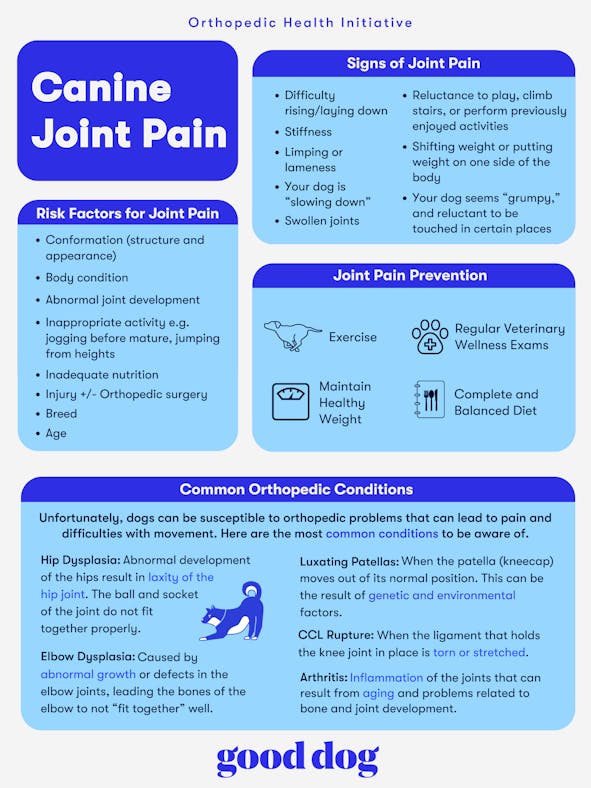
Dogs can be susceptible to orthopedic problems that can lead to pain and difficulties with movement. Here are the most common conditions to be aware of:
- Hip dysplasia: Abnormal development of the hips results in laxity of the hip joint. The ball and socket of the hip joint do not fit together properly
- Elbow dysplasia: Caused by abnormal growth or defects in the elbow joints, leading the bones of the elbow to not “fit together” well
- Luxating patellas: When the patella (kneecap) moves out of its normal position. This can be the result of genetic and environmental factors
- CCL rupture: When the ligament that holds the knee joint in place is torn or stretched
- Arthritis: Inflammation of the joints that can result from aging and problems related to bone and joint development
There are some key signs your dog may be experiencing joint pain, such as:
- Difficulty rising/laying down
- Stiffness
- Limping or lameness
- Your dog is “slowing down”
- Swollen joints
- Reluctance to play, climb stairs, or perform previously enjoyed activities
- Shifting weight or putting weight on one side of the body
- Your dog seems “grumpy,” reluctant to be touched in certain places
You can help prevent joint pain by making sure your dog maintains a healthy weight, exercises consistently, visits the veterinarian for regular wellness exams, and eats a diet that is complete and balanced.
It's also important to help your dog gain traction wherever possible, as this can help ensure they won't injure their joints from slipping.
- Add slip-resistant surfaces (area rugs, anti-skid mats) to slippery floors (wood, laminate, or tile)
- Use carpet treads on stairs
- Secure rugs so they don’t slip
- Use grippy socks or booties on your dog's paws
- Keep your dog’s nails and paw hair trimmed
- Avoid play in areas with slippery surfaces
If your dog is already experiencing joint pain, you can help them by adding ramps or stairs to their environment as needed, raising their food and water bowls, and making sure they have access to a soft and padded dog bed. You can also work with your veterinarian, who may recommend additional treatments such as physical therapy, medication, or acupuncture.
For any easy way to distribute this information, we created the below infographic which you can download and print to share with your communities and puppy buyers!

Join our Good Breeder community
Are you a responsible breeder? We'd love to recognize you. Connect directly with informed buyers, get access to free benefits, and more.