PennHIP examination and registration of hip dysplasia
PennHIP is a testing method for hip dysplasia that is appropriate for younger dogs. Why to consider PennHIP.
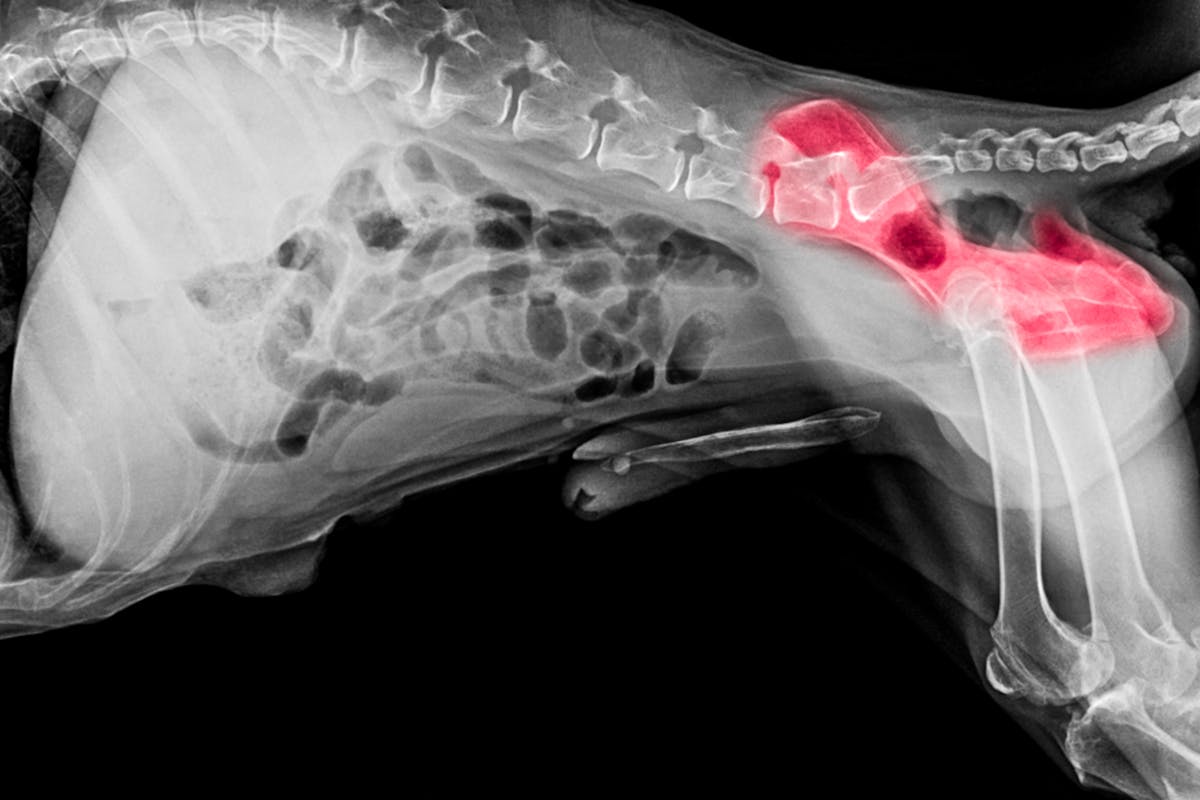
by Dr. Mikel Delgado, PhD
Hip dysplasia is a condition that develops as dogs age, resulting in laxity (looseness) or instability of the joint. Over time, the abnormalities in the joint conformation can result in the breakdown of cartilage, and associated pain and lameness. Signs will vary depending on the severity of the dysplasia.
PennHIP is one screening method that measures the laxity of the hip joint using three different radiographic (x-ray) views or positions:
The distraction view and compression view are used to precisely measure:
- active and passive laxity of the joint
- congruity (how well the femur sits in the hip socket)
- the depth of the hip socket
The hip-extended view provides a supplementary assessment of the presence of osteoarthritis (OA) in the hip joint.
From assessment of the three images, dogs are given a distraction index (DI), which is a measurement of the laxity in the hip joint - the higher the number, the looser the hip joint. The individual dog’s DI can be compared to the overall breed average DI to aid breeders when making breeding decisions. Including dogs with a DI below the breed average in a breeding program helps shift the population in a lower-risk direction while still maintaining genetic diversity. DIs have shown a high level of heritability (although the figure varies between breeds).
Why PennHIP?
A key advantage of this method is that research has shown PennHIP to be a reliable and accurate screening method for individuals at risk of developing hip dysplasia, including in dogs as young as 16 weeks of age. Because of the reliability and standardization of the way laxity is measured, PennHIP is considered less subjective than other assessment methods.
Some disadvantages are that PennHIP requires veterinarians to be trained to perform it, but the training is free and available online. Help with finding a trained veterinarian in your area can be found here.
PennHIP may be more expensive than some other screening methods. Dogs must be heavily sedated or anesthetized to ensure that the musculature involved in the imaging is completely relaxed.
How do I get my dog assessed by PennHIP?
Step 1
Schedule an appointment with a PennHIP trained veterinarian. Be sure to discuss recommended sedation or anesthesia protocols for your dog before your appointment. Your PennHIP trained veterinarian will take care of the submission of all necessary paperwork for the final assessment.
Note: Due to the impact of reproductive hormones on laxity of ligaments, it is recommended that films be taken at least one month after weaning puppies and one month before or after a heat cycle.
Step 2
Next, radiographs are sent to the PennHIP Analysis Center for evaluation.
Step 3
Wait a few weeks, and results will be sent to you and to your primary veterinarian, who can discuss results with you.
Your dog’s results are then added to the PennHIP database, allowing for the monitoring of breed trends/averages. Having a large database contributes to our knowledge of hip dysplasia in dogs, and advances canine health and welfare.
Fees
Fees will vary, but will include: sedation/anesthesia, 3 radiographic images, and charges associated with submitting the images to AIS PennHIP for evaluation. You will pay a one time fee to the trained veterinarian (you do not have to make any payments directly to AIS PennHIP).
References
Ginja, M. M. D., Ferreira, A. J. A., Silvestre, M., Gonzalo-Orden, J. M., & Llorens-Pena, M. P. (2006). Repeatability and reproducibility of distraction indices in PennHIP examinations of the hip joint in dogs.Acta Veterinaria Hungarica,54(3), 387-392.
Haney, P. S., Lazarowski, L., Wang, X., Wang, X., Hathcock, J., Lofton, R., ... & Waggoner, L. P. (2020). Effectiveness of PennHIP and Orthopedic Foundation for Animals measurements of hip joint quality for breeding selection to reduce hip dysplasia in a population of purpose-bred detection dogs.Journal of the American Veterinary Medical Association,257(3), 299-304.
Powers, M. Y., Karbe, G. T., Gregor, T. P., McKelvie, P., Culp, W. T., Fordyce, H. H., & Smith, G. K. (2010). Evaluation of the relationship between Orthopedic Foundation for Animals' hip joint scores and PennHIP distraction index values in dogs.Journal of the American Veterinary Medical Association,237(5), 532-541.

Join our Good Breeder community
Are you a responsible breeder? We'd love to recognize you. Connect directly with informed buyers, get access to free benefits, and more.