Legg-Calve-Perthes (LCP): OFA examination and registration
What you need to know about testing your dog for this hip disorder, which can lead to pain and stiffness.
by Dr. Mikel Delgado, PhD
What is Legg-Calve-Perthes?
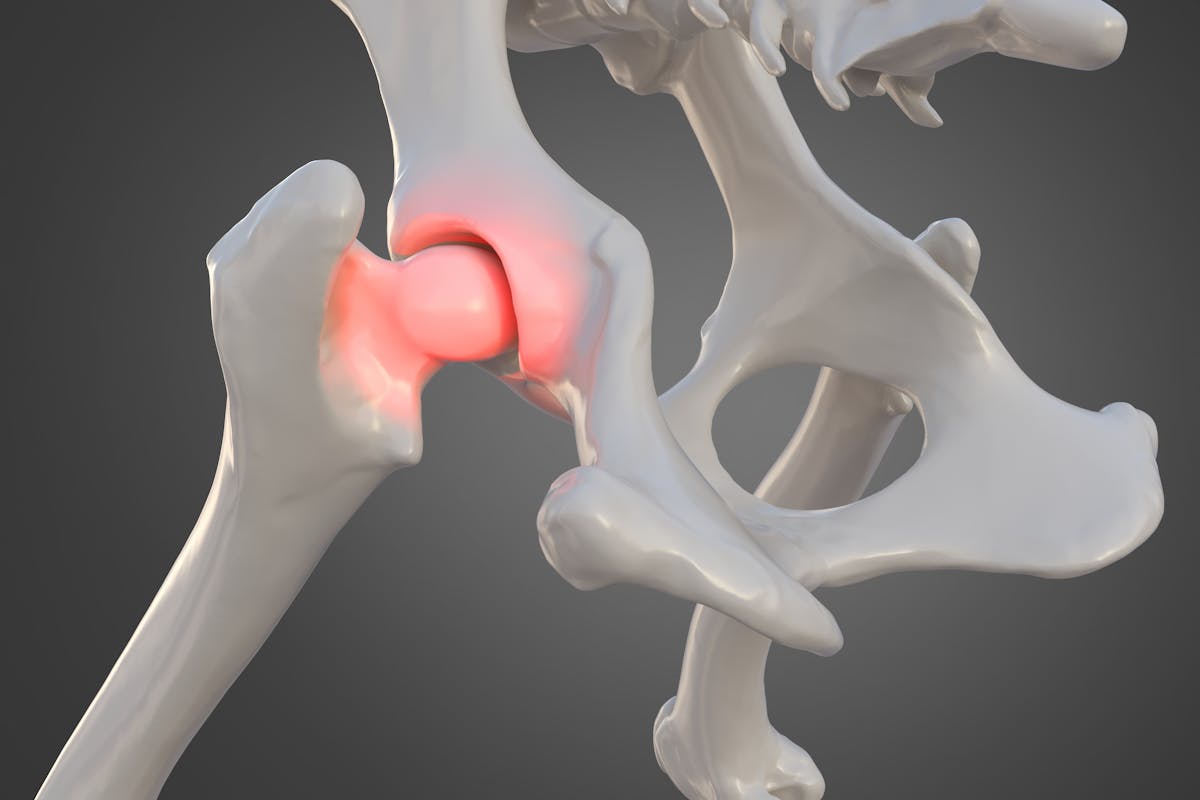
Legg-Calve-Perthes is a hip disorder in which the head of the femur (also described as the “ball” of the ball-and-socket hip joint) degenerates. A lack of blood supply to the femoral head leads to weakening and fracturing of the bone. Eventually, the hip will collapse, leading to stiffness, pain and arthritis. The most common signs of LCP are limping or crying out in pain. Treatment often includes pain control, physical therapy, surgery, or hip replacement.
Although the exact cause of LCP is unknown, there is a genetic component. Small dogs such as toy breeds and terriers are often affected by LCP. Dogs with LCP should not be used in breeding programs.
How do I get my dog screened and registered with the Orthopedic Foundation for Animals?
Although LCP is believed to be heritable, to date there is no genetic test for LCP. The existing screening for LCP requires x-rays, which can be performed by a licensed veterinarian.
To be registered in the database with an LCP number, dogs must be at least 12 months of age when x-rays are taken.
Step 1
Schedule an appointment with your veterinarian. Download, print, and bring the OFA form to your appointment (found here).
Note:
Sedation to the point of muscle relaxation is recommended. Discuss the use of sedation with your veterinarian prior to the appointment.
Due to the impact of reproductive hormones on laxity of ligaments, it is recommended that films be taken at least one month after weaning puppies and one month before or after a heat cycle.
Step 2
When you arrive for your appointment, your veterinarian will examine your dog, give appropriate sedation when indicated and take x-rays of your dog. Be sure to have all the appropriate paperwork ready for your veterinarian to complete.
X-rays should be of the standard hip extended ventrodorsal view as recommended by the AVMA. The dog’s identification must be included in the x-ray. To be accepted, x-rays must have good contrast and proper positioning of the dog.
Step 3
Your veterinarian will complete and sign the application form for OFA, identify the radiograph with your dog’s registration name or number, the date of the radiograph, and the veterinarian’s name or hospital name.
Note: It is recommended that the permanent identification of the dog (e.g., tattoo, microchip) is verified by the veterinarian at the time of the evaluation.
Step 4
Once the application form is completed either you or your veterinarian will then submit the radiographs via one of the methods listed here. The owner should indicate if they give permission for any abnormal findings to be reported in the health database.
Note: The radiograph, application and fees will need to be sent together, either by your veterinarian or yourself, depending on method of submission.
Send to: Orthopedic Foundation for Animals
2300 E Nifong Blvd
Columbia, MO 65201
Phone (573) 442-0418; Fax (573)875-5073
Fee schedule (as of July 2022)
Note: this does not include the cost of your veterinary exam and radiographs
For Dogs 12 months or older:
LCP Evaluation: $35 each
A litter of 3+ dogs submitted together: $120 total
Kennel Rate (5+ dogs submitted together): $25 each
Note: When submitting radiographs for both OFA hip and LCP evaluations, only the regular OFA hip fee applies, the LCP fee is waived
Evaluation fees will be refunded for dogs determined by the OFA to be affected.
Step 5
A Board Certified Radiologist will review the x-rays. Dogs without evidence of LCP will receive an OFA Legg-Calve-Perthes number. If a dog has evidence of LCP, the OFA will return a report of the findings.
Already checked for hip dysplasia?
Radiographs being used for OFA hip dysplasia assessment can also be used to evaluate the presence of LCP. LCP would lead to an abnormal result in an OFA evaluation.
If a dog is at least 12 months old and received a normal OFA hip prelim or definitive result, the dog is automatically eligible for a normal LCP number. If your dog has had a qualifying OFA hip evaluation, you can complete the LCP application.
To receive an OFA LCP number based on a previous hip evaluation, owners should complete the appropriate application and the OFA will assign an LCP number.
References
Lee, R. (1970). A study of the radiographic and histological changes occurring in Legg‐Calve‐Perthes disease (LCP) in the dog.Journal of Small Animal Practice,11(9), 621-638.
Robinson, R. (1992). Legg‐Calve‐Perthes disease in dogs: Genetic aetiology.Journal of Small Animal Practice,33(6), 275-276.

Join our Good Breeder community
Are you a responsible breeder? We'd love to recognize you. Connect directly with informed buyers, get access to free benefits, and more.