Ichthyosis and your dog
What you need to know about this rare, but serious, skin condition
Good Dog is on a mission to educate the public, support dog breeders, and promote canine health so we can give our dogs the world they deserve.
Good Dog is on a mission to educate the public, support dog breeders, and promote canine health so we can give our dogs the world they deserve.
Good Dog is on a mission to educate the public, support dog breeders, and promote canine health so we can give our dogs the world they deserve.
By Dr. Mikel Delgado, PhD
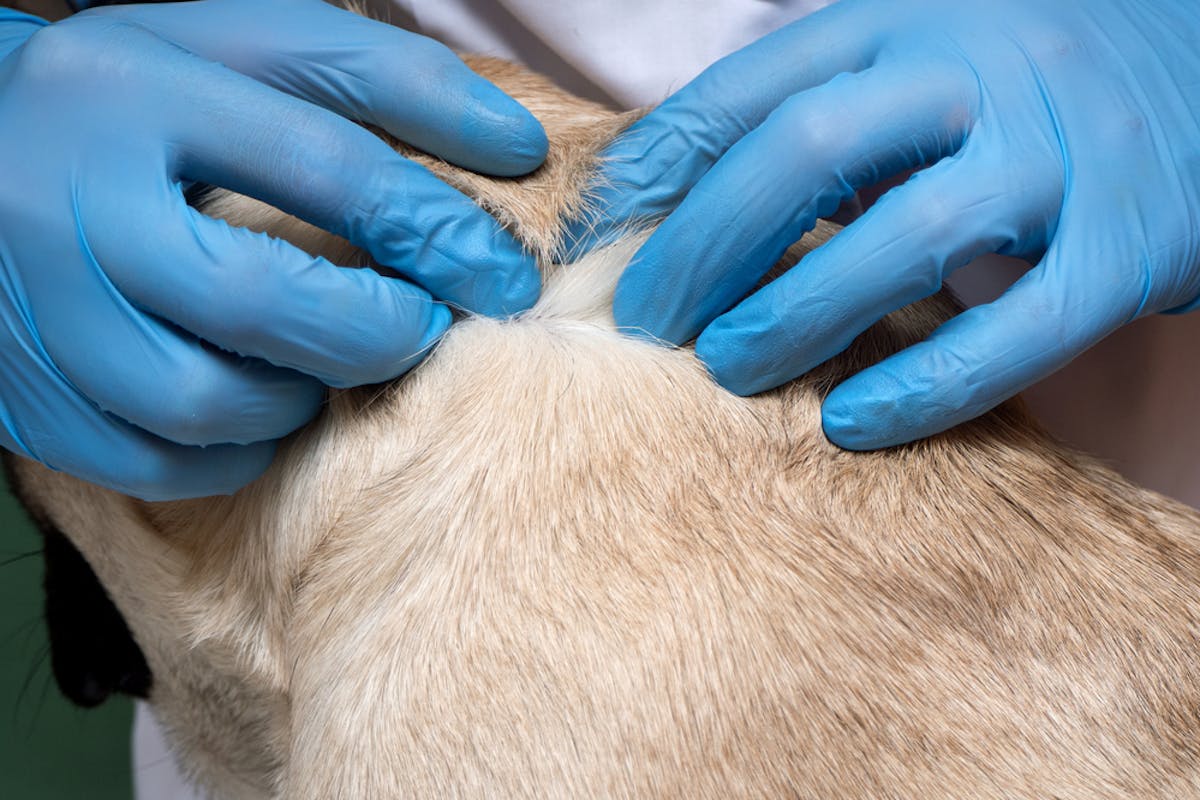
Canine ichthyoses are a group of rare skin conditions that lead to a variety of dermatological signs. Affected dogs often have large areas of thickened/greasy skin that may become cracked or peel away; these flakes of skin may fall off or get trapped in the fur. Some dogs experience hair loss or discoloration of the skin, and this condition can also affect the nose pad or footpads. Ichthyosis is often first observed in puppies, and typically gets worse as dogs age, although some dogs have milder cases than others. In some cases, this condition may be painful, although it does not lead to itchiness.
Breeds affected
There are at least 12 breed-specific forms of ichthyosis, but the related genes have not been identified in all breeds. Specific genetic mutations related to ichthyosis have been identified for:
- Jack Russell Terriers (TGM1)
- Golden Retrievers (PNPLA1)
- American Bulldogs (NIPAL4-chr 4)
- Norfolk Terriers (KRT10)
- German Shepherds (ASPRV1-chr 10)
- Great Danes (SLC27A4-chr 9)
There is a mutation in Cavalier King Charles Spaniels (FAM83H) that leads to a related condition called Dry Eye Curly Coat Syndrome, also known as Congenital keratoconjunctivitis sicca and ichthyosiform dermatosis, CKSID.
Diagnosis
If signs of ichthyosis are observed, other dermatological conditions (e.g., ringworm) must be ruled out. A skin biopsy must be performed for definitive diagnosis, where a pathologist can carefully examine the sample for characteristics consistent with ichthyosis.
Genetic tests are available for some breeds (see the above list), but a negative result does not guarantee that there isn’t another genetic mutation that could lead to ichthyosis in that dog. The discovery of genes related to ichthyosis is relatively recent, and researchers continue to work to better understand the genetic variants related to this condition.
Ichthyosis is considered a chronic condition that has no cure. Signs may improve with the use of medicated shampoos and rinses, and topical creams that may prevent infection. Severely affected dogs may need to be euthanized to prevent suffering.
Mode of inheritance
Ichthyosis has an autosomal recessive mode of inheritance, meaning that a dog must inherit two copies of the genetic variant to be affected. Dogs with ichthyosis should not be bred as all of their offspring would be either carriers or affected dogs. Dog breeders should work with a veterinary genetic counselor when considering breeding dogs who are known or likely carriers of ichthyosis.
Resources
First Skin Foundation: Ichthyosis and Dogs
Mauldin, E. A. (2013). Canine ichthyosis and related disorders of cornification in small animals. The Veterinary clinics of North America. Small Animal Practice, 43(1), 89. https://www.ncbi.nlm.nih.gov/pmc/articles/PMC3529142/
Mauldin EA, Credille KM, Dunstan RW, Casal ML. The Clinical and Morphologic Features of Nonepidermolytic Ichthyosis in the Golden Retriever. Veterinary Pathology. 2008;45(2):174-180. 10.1354/vp.45-2-174

Join our Good Breeder community
Are you a responsible breeder? We'd love to recognize you. Connect directly with informed buyers, get access to free benefits, and more.