March Book Club: Zazie Todd On Making Our Dogs Happy
The author of Wag: The Science of Making Your Dog Happy shares must-try tips!

By
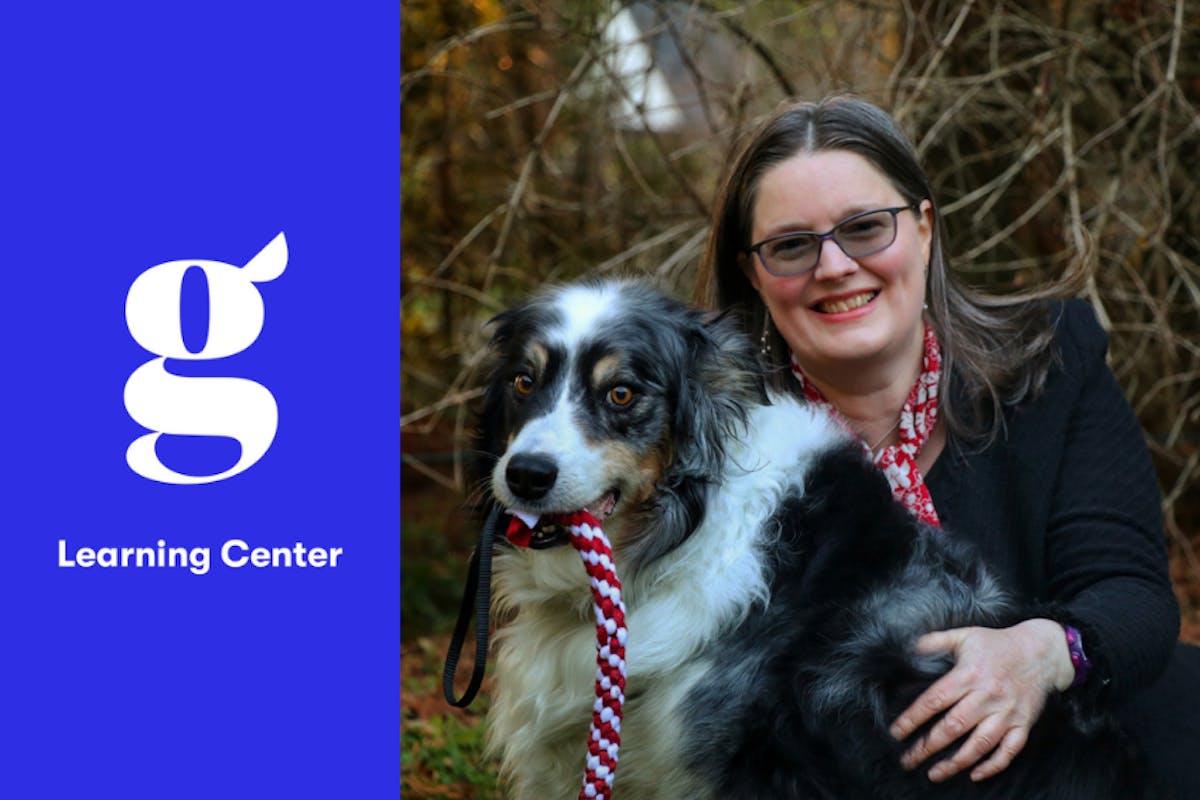
Author Zazie Todd smiles with Bodger, her Australian Shepherd
Welcome to The Good Dog Book Club, a community that loves books and dogs. Each month, the Good Dog team will pick a dog-focused book we can all read and chat about together. For March 2022, we selected Wag: The Science of Making Your Dog Happy by Zazie Todd, an animal behavior expert and award-winning writer. We’ve enjoyed promoting conversations across our social channels over the past couple of weeks, and now, it’s time to hear from the author herself. Below, Zazie opens up about her relationship with dogs, her advice for dog owners, and more!
What inspired you to write this book?
I am always inspired by my own pets and by seeing what makes them happy. Wag was inspired by my two dogs, Ghost and Bodger. Ghost was an Alaskan Malamute/Siberian Husky cross who was absolutely beautiful and loved all other dogs. Bodger was an Australian Shepherd who was a lovely, happy, fun dog. I wrote about having to say goodbye to Ghost in the book (in a chapter on the end of life), and sadly, we lost Bodger just before Wag was published. Now, I have a senior Shih Tzu, Pepper, who is very sweet. (I have two cats as well, Harley and Melina, who inspired me to write the sister book to Wag, Purr: The Science of Making Your Cat Happy, which comes out in May.)
What was the easiest part about writing this book? How about the hardest?
I think writing a book is one of the hardest things I’ve ever done, so the easiest part was probably deciding that I wanted to write it! I especially enjoyed the sections where I wrote about Ghost and Bodger and told stories of the things they got up to. The hardest part was actually the editing, but luckily, I had a good relationship with my editor. There was one point in the process where I had responded to lots of comments and suggestions from my editor and, as a result, the manuscript was way too long. I needed to cut 10,000 words from it, and I had to go through it many, many times in order to do that.
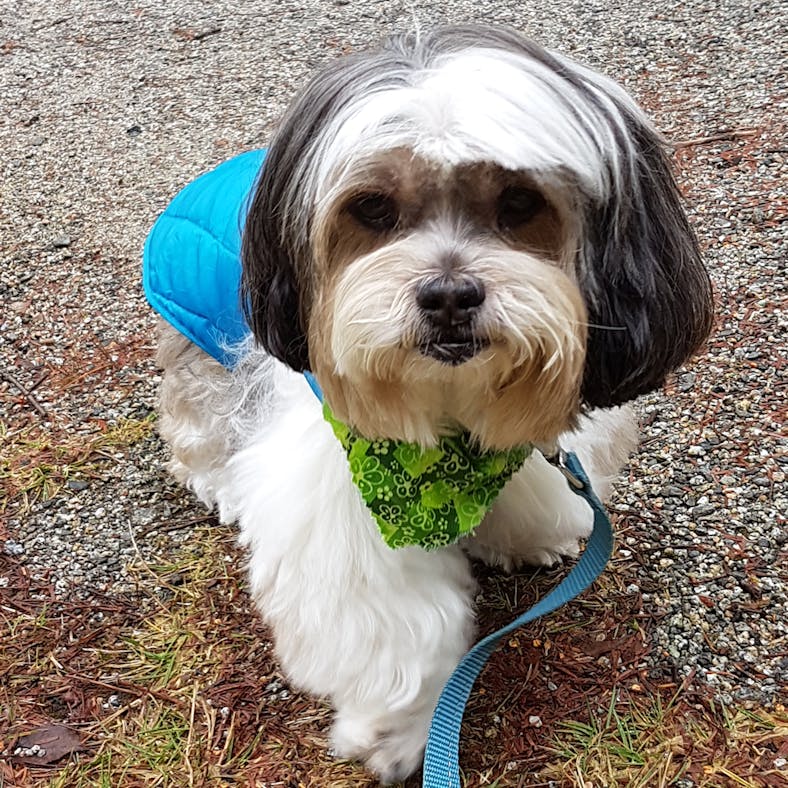
Zazie's Shih Tzu, Pepper, poses in a green bandana
How did writing this book change your relationship with dogs?
I like to think I got to know dogs a lot better. To write the book, I had to read a lot of canine science and think about what dogs need from their guardians. I also brought a background in dog training (I studied that at the prestigious Academy for Dog Trainers). So I already paid attention to dogs and their body language, but I’ve become a lot more observant as a result of writing the book. I am always watching them, looking to see what they are doing, noticing subtle body language signs. And I love meeting dogs! But only if they want to come up to me and say hi; I always give them the choice.
Another change is that sometimes now people send me photos of their happy dogs, which I love to see!
What’s something dog owners can do right now to make their pups a little happier?
Anything that is a joint activity that you both love! One of my favorites is a short training session. Find something your dog really likes (little pieces of chicken or cheese, for example, or some kind of play) and use it as a reward while you teach your dog something just for fun. It could be something your dog could usefully learn (like a sit-stay, for example) but it could just as well be a trick like spin or shake-paw or sit pretty. Dogs love working for rewards, and it’s a really nice way to have fun with them. I do lots of little trick training sessions with Pepper.
Another option is to take them on a "sniffari," a smell walk in which they get to follow their nose and sniff as much as they like (so long as it’s safe for them, of course). Dogs have such amazing noses and it’s great to give them opportunities to smell.
What do you hope readers take away from your book?
I hope they take away a better understanding of what their dog needs, from puppyhood to being a senior dog and the end of life. When you know what your dog needs, they will be happier, and you will have a better relationship with them. And what’s nicer than a happy dog? It’s just so heartwarming to see your dog being happy and doing doggy things. I’ve got a set of tips at the end of each chapter and a checklist for a happy dog at the end of the book to help people put the ideas into practice.
Do you have any advice for someone who wants to write a book?
I would say just give it a go. Make time for writing as a regular activity, whether it’s sitting down for half an hour each day or aiming for a set number of words each week. And just write. Don’t expect those words to come out as perfect prose! So much of writing is editing, but you have to have a draft in the first place before you can get to that point. And you don’t have to write in a particular order. If you’re finding a section hard, make a note of what you want to put there and move on to something else; you can come back to that section another time. Just concentrate on getting the words down on the page, and make them beautiful later!
What are some of your favorite dog books?
There are so many great dog books these days! One favorite is Dog Sense by John Bradshaw (titled In Defence of Dogs in the U.K.). It’s a wonderful summary of canine science, and when I first read it, I thought, wow! It’s so interesting. I love all of Alexandra Horowitz’s books. It’s hard to pick a favorite, but I really love the way she explores the sense of smell of both people and dogs in Being a Dog. It makes you pay more attention to your nose and experience the world a little differently. I also loved Cat Warren’s book What the Dog Knows about working dogs and her own work with her cadaver dog, Solo. It’s fascinating and beautifully written. And I have to give a shout-out to The Culture Clash by Jean Donaldson too, not just because it’s a seminal book and full of wit, but also because it’s what got me started in dog training and led me to study with her.