How To Fly Safely With Your Dog
A step-by-step guide to taking a flight with your dog

By
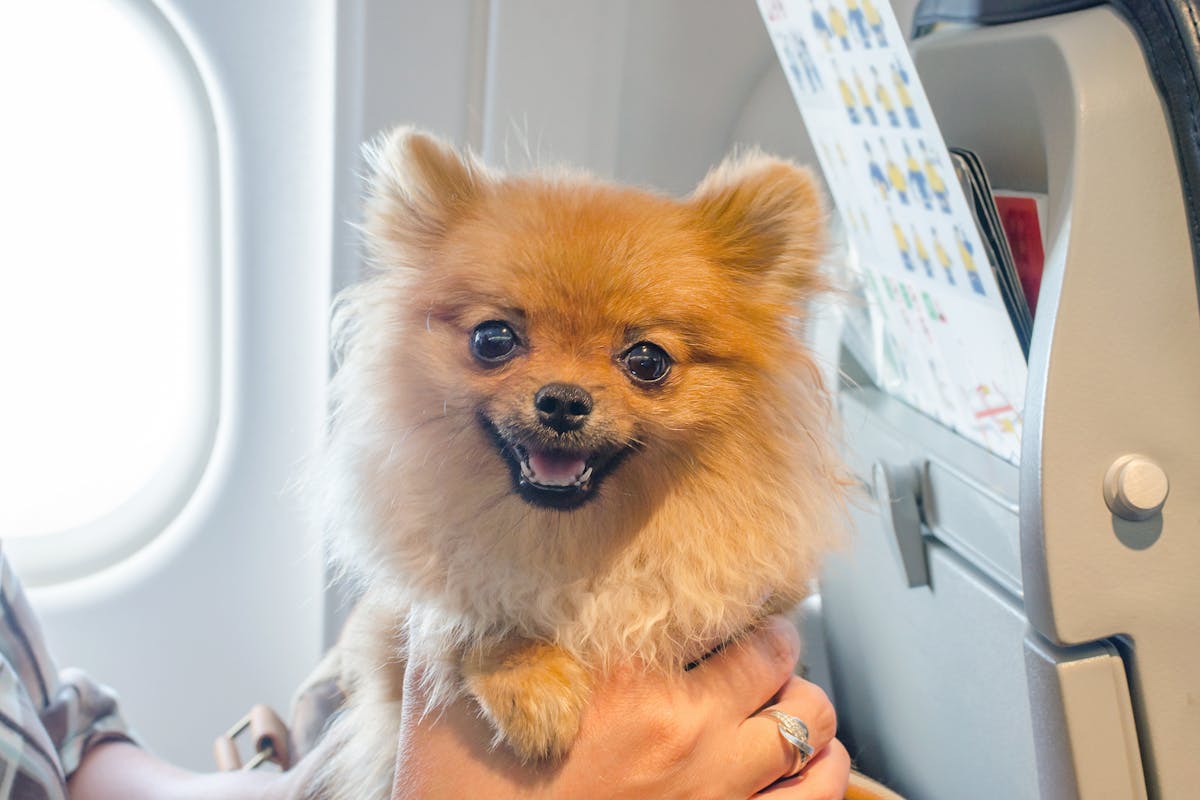
Traveling with your dog can be a source of joy and connection, but also of stress and anxiety. If you have to fly with your dog, whether you’re going across the state or an ocean, “it’s up to you to make your pet’s flight as safe as humanly possible,” Lindsey Wolko, founder and CEO of the nonprofit Center for Pet Safety (CPS), told Good Dog.
Preparing to fly
Review your airline’s policies
Each airline has different rules and regulations for dogs. Some have weight limits for dogs in the cargo hold. Some don’t allow dogs in the cabin at all. In general, your dog needs to be well behaved, in good health, and at least 8- to 10-weeks old. Check your airline’s website for up-to-date policy information.
Book a direct flight
Airline transfers and layovers can lead to delays, which means your pup may be spending more time in cargo or in a carrier than originally planned. This might increase your dog’s risk of getting over-stressed and agitated.
Get your dog’s health information in order
Within 10 days of the flight, schedule a veterinarian appointment to check that your dog is healthy enough to travel and to receive a health certificate, which may be required by law for interstate travel. Also, get any vaccinations and booster shots your dog needs to travel, and pick up whatever medications she’ll need on the trip. Don’t forget to pack a copy of her prescription information.
“A lot of people say, ‘Oh, airlines never check health certificates,’” Wolko said. “But every time I’ve flown, they have checked them. If you don’t have that paperwork prepared, you and your pet might not be allowed to board the flight.”
Decide on in-cabin vs. cargo area
Your dog can spend the flight in one of two areas of the plane: with you in the main cabin, or in the pet-safe cargo area in the plane’s hull. The most important determining factors are your dog’s size and breed. Is she small enough to fit in a travel carrier that can slide beneath the seat in front of you, or will she need to travel in a larger, hard-sided crate in the cargo hold? Is she a brachycephalic (short, snub-nosed) breed, such as a pug, boxer, bulldog, or Boston terrier? If so, she won’t be permitted to fly cargo, and might not be able to fly at all. According to the American Veterinary Medical Association (AVMA), these breeds are at higher risk of respiratory problems. Definitely check with your veterinarian and airline requirements to help make this decision.
Get an appropriate travel carrier
Most airlines follow the International Air Transport Association (IATA) guidelines, so make sure yours does, too. The carrier should be well ventilated, size appropriate, durable, and clearly labeled with your contact information.
Help your dog acclimate to her carrier
In the weeks or, better yet, months before the flight, train your dog to get comfortable with her carrier. Start by placing it in the area where she spends her time. Create a positive association with the carrier by feeding her meals or giving her treats inside it. Give the carrier a familiar, reassuring scent with an old shirt or her favorite blanket. Have your dog spend gradually longer periods of time in the carrier. Finally, get her used to being in motion by carrying her around while inside it. These steps will minimize her stress during travel.
On the day of your flight
Pack a to-go bag
Include contact information for you, your veterinarian, and someone at your destination. Also bring a color photo of you and your dog together, her medications and medical records, plus treats, food, and water.
Don’t use sedatives or tranquilizers
Sedating your dog might seem like an easy way to reduce her anxiety, but most dogs “do not require sedatives to travel,” said Dr. Jerry Klein, chief veterinary officer for the American Kennel Club (AKC).
“They can absolutely cause more problems than good,” Wolko echoed. Help manage your dog’s nerves with alternatives to medication such as a calming collar or comfort item.
Arrive extra early
The earlier you arrive at the airport, the more time you have to resolve any issues that might arise. We recommend getting there at least an hour earlier than recommended.
Give your dog preflight exercise
A tired dog is a calm dog. Take her for a long walk the day before the flight, and play with her in the airport’s pet-relief area or parking lot before boarding. (Check out the most dog-friendly airports in the U.S.) “Make sure they’re exercised and have the opportunity to relieve themselves,” Wolko said.
On the plane
Be your dog’s best advocate
“We can’t stress enough that when you have an animal in commercial travel, you really have to keep making sure that everyone’s aware of it and that it’s proceeding correctly,” Kitty Block, CEO of the Humane Society of the United States (HSUS), told CNN. In short, tell as many members of the flight crew as possible that you’re traveling with a dog.
“Find a dedicated point of contact with the airline so you can monitor your pet’s condition and get to them as quickly as possible after the flight,” Wolko advised. She once flew her 9-month-old dog Maggie in cargo, and delays meant Maggie wouldn’t arrive until 1:30 a.m. on Saturday and that she couldn’t be picked up until Monday or Tuesday. Naturally, that wouldn’t work — but, fortunately, Wolko had notified the flight crew about Maggie beforehand. The happy ending? “The pilot personally escorted Maggie to me,” Wolko said. “So you have to be an advocate for your pet.”
Let sleeping dogs lie
“When I’ve traveled with my dogs in the cabin, they’ve fallen asleep once we’re in the air,” Wolko said. “And it’s best to just leave them alone and let them sleep.”